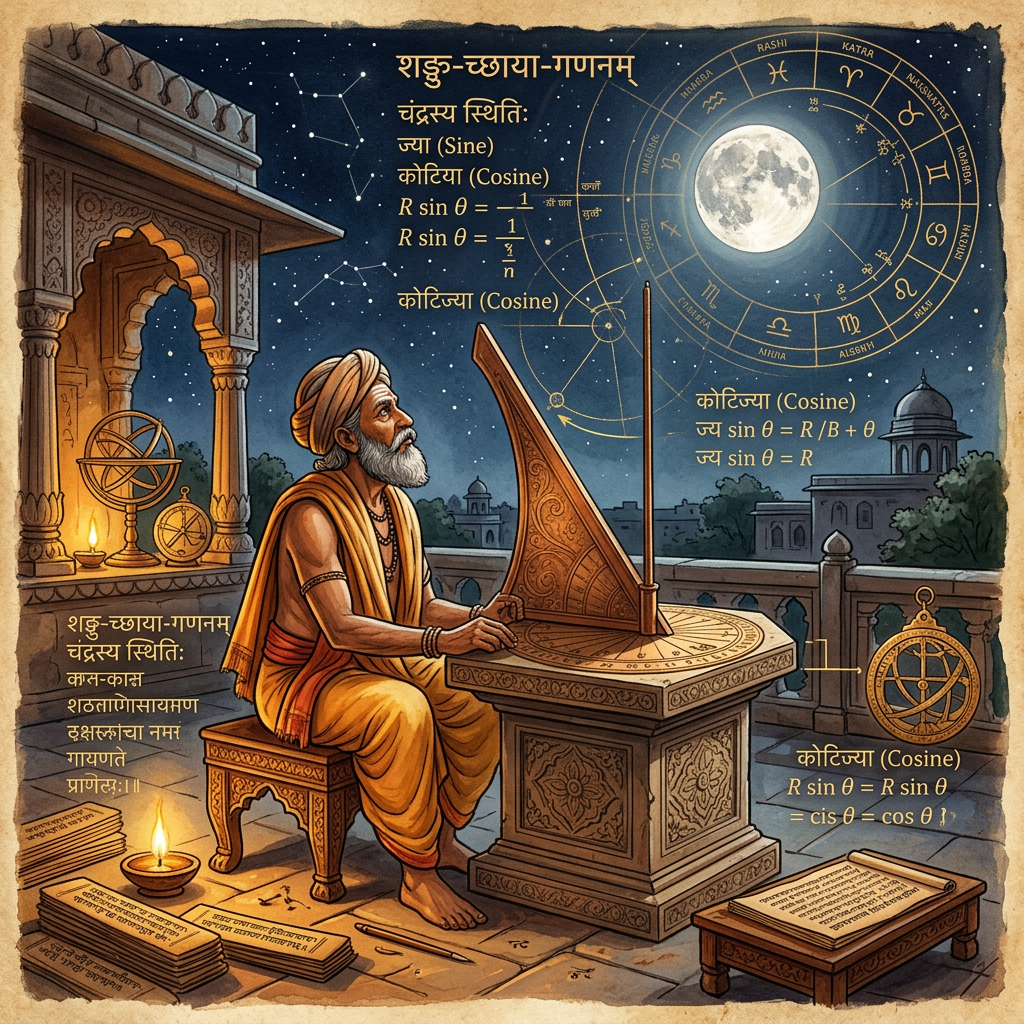
New research published in the Journal of Astronomy & Heritage has applied modern orbital mechanics to the ancient Sanskrit verses of the Lagadha Jyotisha. The study demonstrates that the mathematical constants used in the text to calculate the lunar cycle were far more precise than previously estimated by 19th-century scholars. The computational model shows that the ancient observers achieved an error margin of less than 0.05% in predicting the lunar apogee over a five-year yuga.
The study highlights the use of base-10 positional notation and specific algorithms for handling celestial remainders, which allowed the Vedic astronomers to account for the moon's variable velocity. This research suggests that the observational foundation of Indian astronomy was already highly empirical and standardized by the 12th century BCE, challenging the notion that such precision was only achieved through later Greek influence.