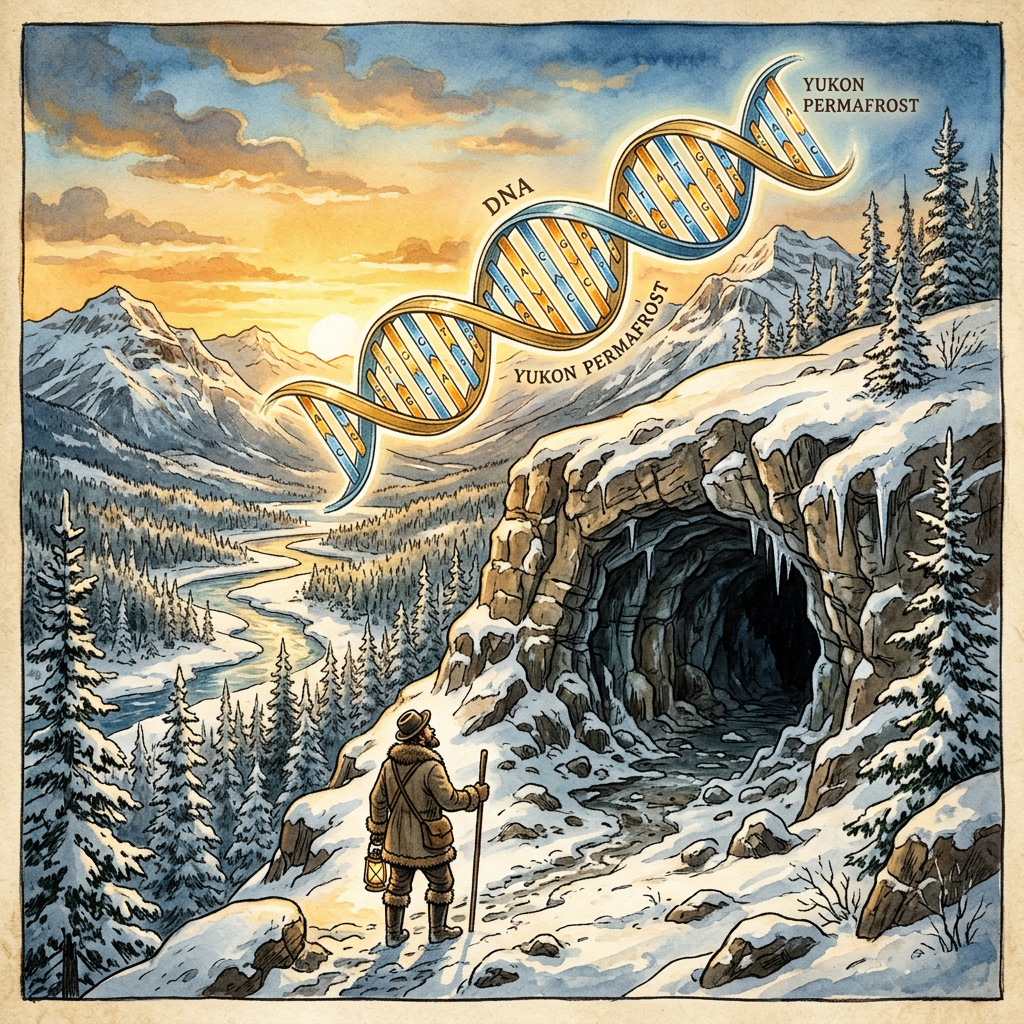
In a major publication in Science Advances, researchers have detailed the genomic analysis of human remains found in the Bluefish Caves of the Yukon territory. The study identifies a previously unknown "ghost lineage" of humans who occupied the Beringian refugium during the Last Glacial Maximum. This group is genetically distinct from both the Ancestral Native Americans and the ancient North Siberians, representing a lost pulse of migration that failed to move further south as the ice sheets melted.
The study uses ancient DNA (aDNA) to reconstruct the population dynamics of the late Pleistocene, revealing that these individuals were highly adapted to the extreme cold of the mammoth steppe. The findings challenge the linear model of American colonization, suggesting that multiple distinct groups vied for survival in the far north for millennia before the first successful dispersal into the interior of the continent.