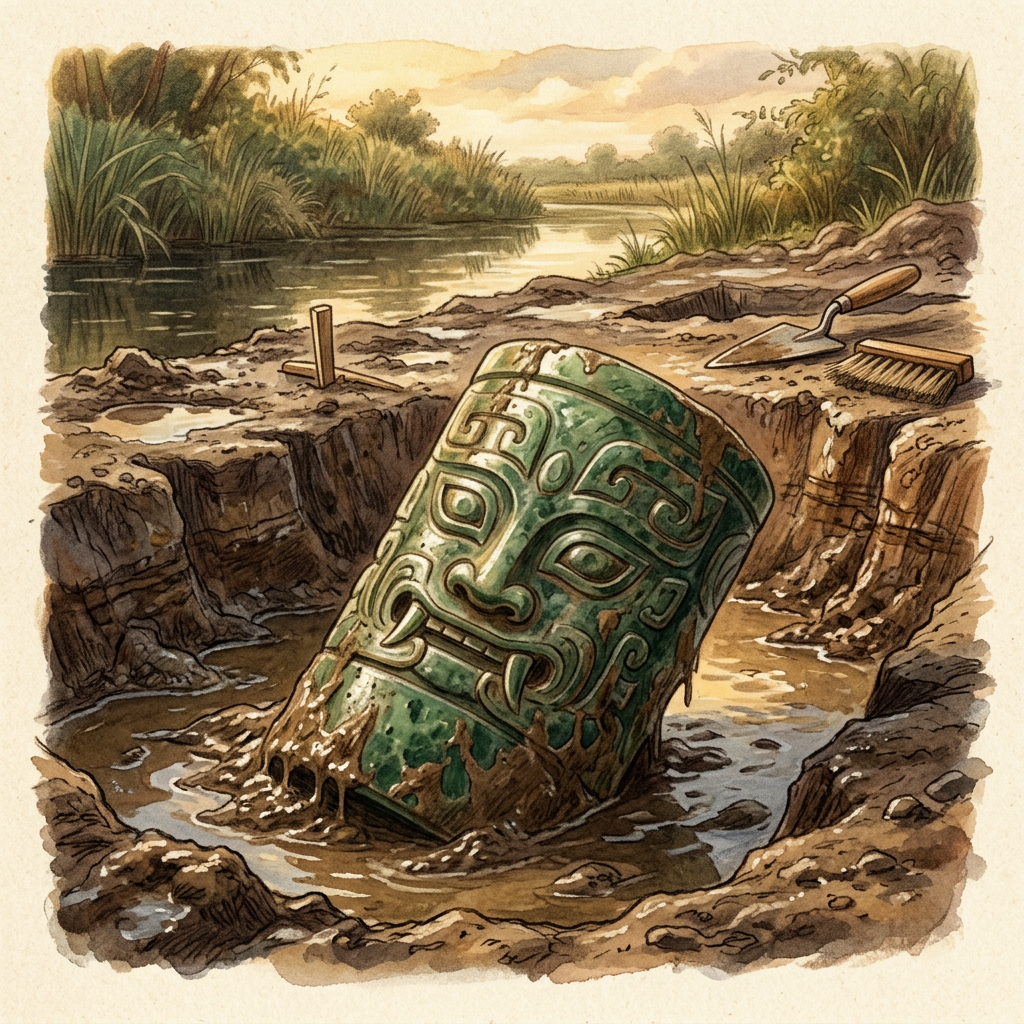
Excavations of a silted-up canal in the Liangzhu World Heritage site have yielded a cache of ritual jade cylinders (cong) placed at precise intervals. Researchers believe these were part of an annual 'Water-Opening' festival designed to purify the irrigation systems that sustained this 5,000-year-old civilization.
The placement of these exquisite jade artifacts suggests that the Liangzhu culture viewed water management as a sacred duty. These findings offer a new perspective on the pre-historic roots of Chinese water festivals and the spiritual life of early hydraulic societies.