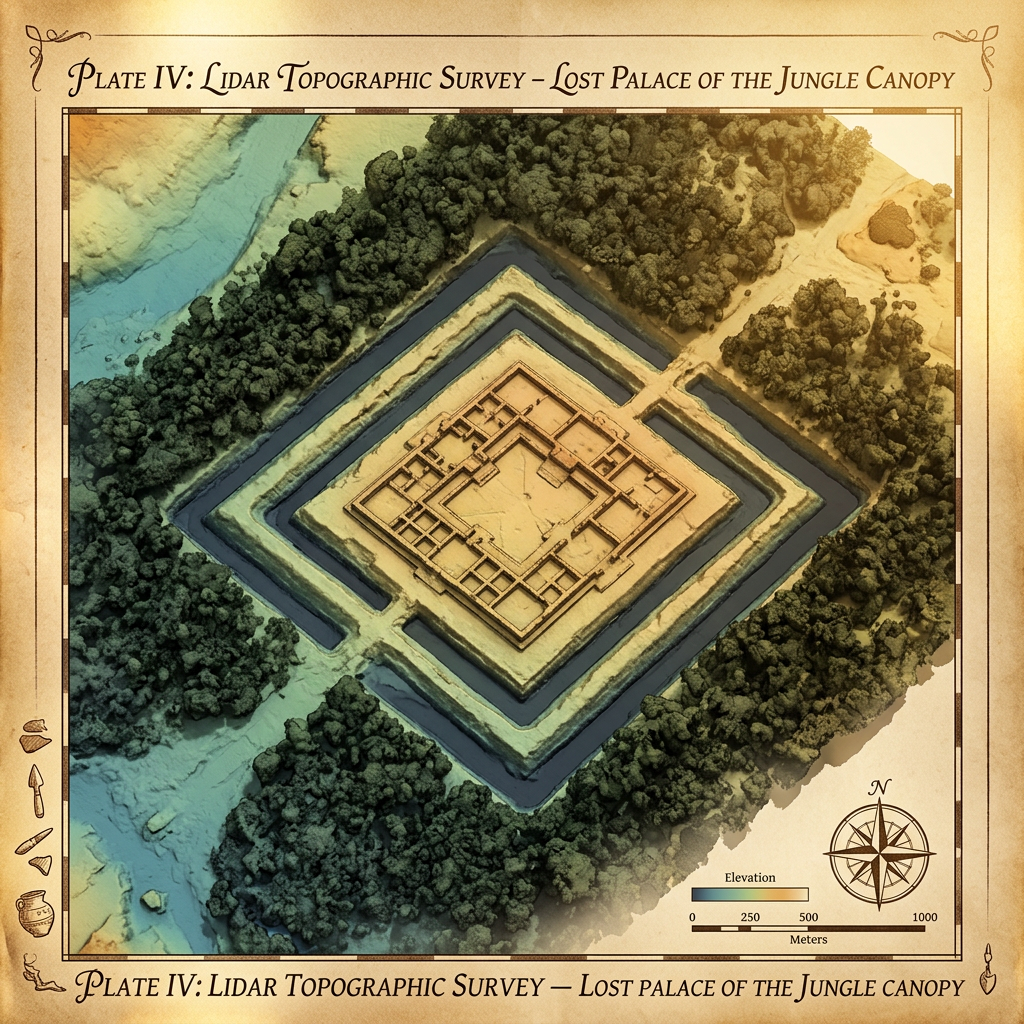
Using advanced LiDAR (Light Detection and Ranging) technology, researchers have identified a previously unknown Mayan urban center in the Holmul River Basin of Guatemala. The centerpiece of the discovery is a 'Floating Palace'—a massive stone complex built on an artificial island within a seasonal wetland. The site was protected by an intricate defensive moat and rampart system stretching over three kilometers.
The LiDAR imagery reveals a densely packed urban grid surrounding the palace, with thousands of residential structures and agricultural terraces. This 'aquatic city' suggests that the Maya developed highly specialized wetland management systems to thrive in environments previously thought to be uninhabitable. The discovery challenges traditional models of Mayan urbanism as being strictly land-based.