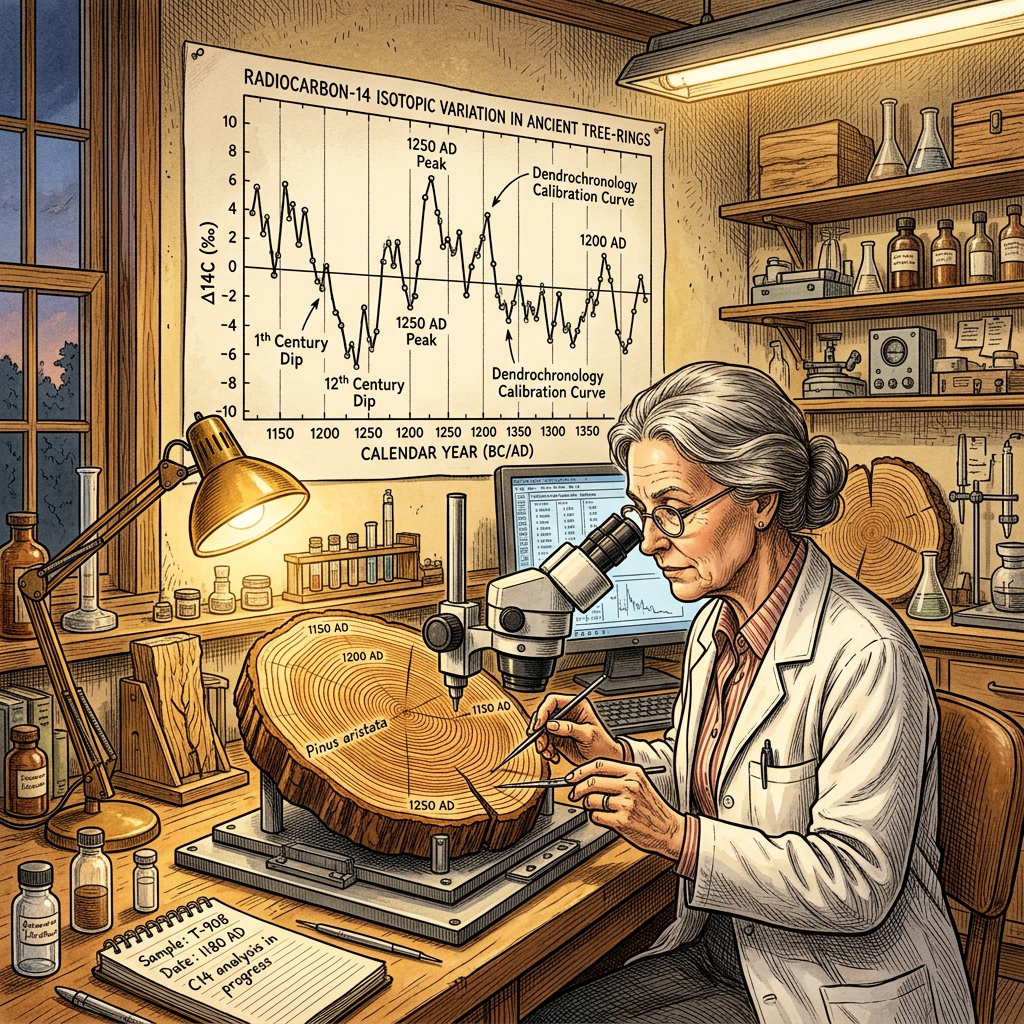
A study published in Radiocarbon & Archaeology Review has introduced a revolutionary calibration methodology for Carbon-14 dating specifically tailored for high-altitude environments. By cross-referencing isotope data from 3,000-year-old Andean cedars with archaeological remains, researchers have achieved a dating precision of within 5 to 10 years, compared to the previous 50-year margin.
This new calibration has already been applied to several sites in the Titicaca Basin, revealing that the expansion of pre-Incan agricultural terraces occurred much more rapidly than previously thought, likely in response to a sudden and localized climate shift in 900 BCE. The methodology is expected to transform our understanding of human-environment interactions in mountain civilizations globally.