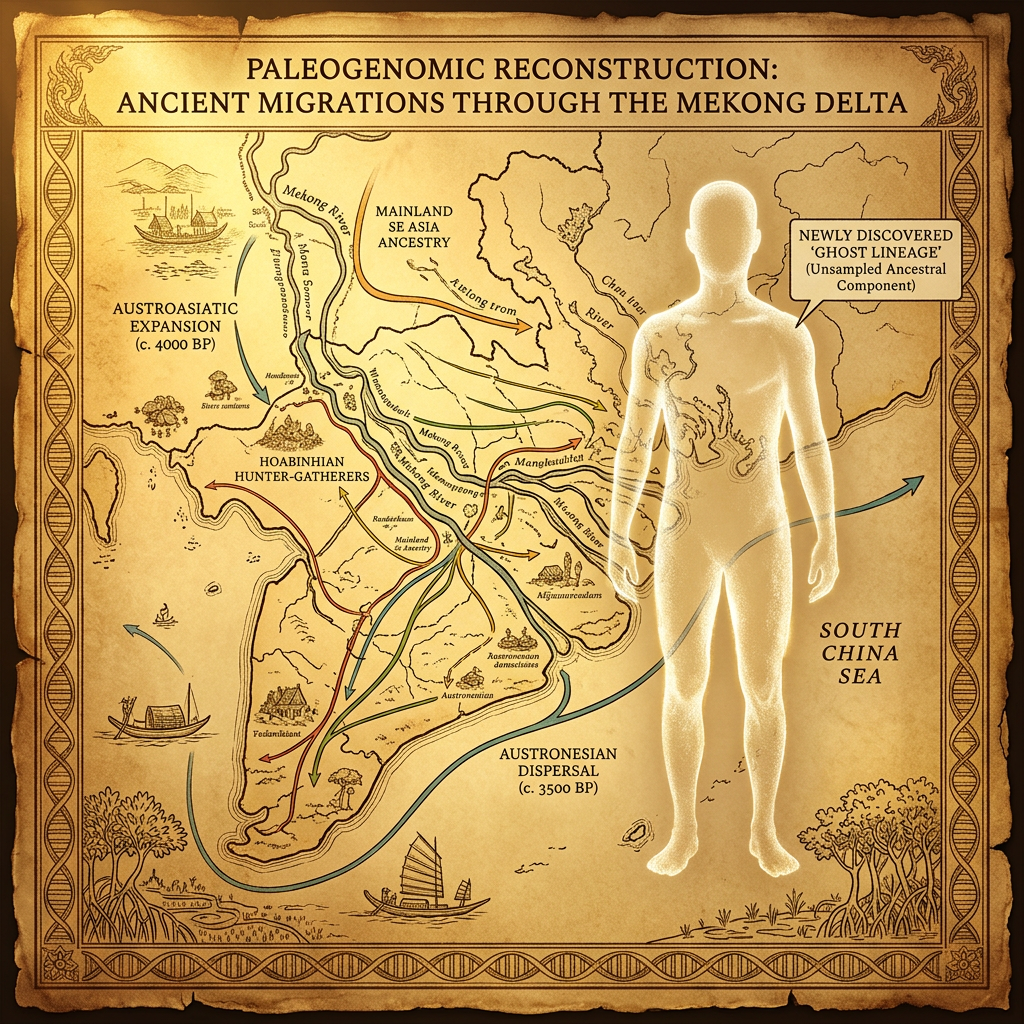
Researchers in the Journal of Human Evolution have identified a previously unknown 'ghost lineage' of humans through the genomic analysis of remains found in the Mekong Delta, dating to the late Pleistocene. This unique genetic signature suggests a population that remained isolated for nearly 10,000 years, developing specialized adaptations for life in humid, riverine environments before the arrival of Neolithic farmers.
The study indicates that this 'Mekong lineage' contributed significant genetic material to modern populations in Southeast Asia, particularly those involved in early maritime and wetland-based societies. This discovery adds a critical piece to the puzzle of human migration into Sunda and the subsequent diversification of Austroasiatic peoples.