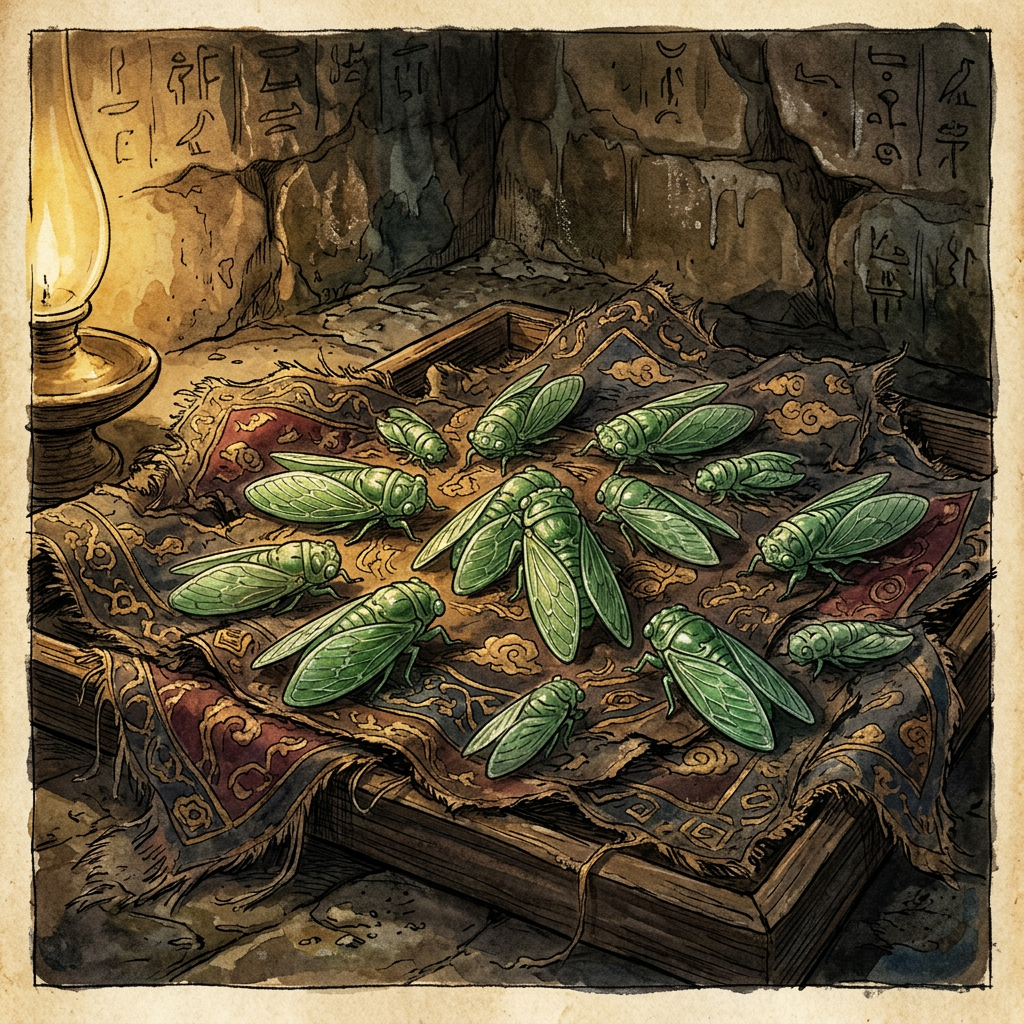
During excavations of a late Zhou Dynasty tomb complex in China's Henan Province, researchers discovered a hidden chamber containing over 300 finely carved jade cicadas. In ancient Chinese culture, the cicada was a powerful symbol of regeneration and immortality. The strategic placement of these artifacts within the tomb, combined with evidence of seasonal food offerings, suggests that these burial rites were part of an organized spring ancestor-veneration tradition.
This discovery provides a missing link between early aristocratic funeral customs and the development of the Qingming Festival, or Tomb-Sweeping Day. The presence of specialized ritual tools alongside the jade suggests that these spring ceremonies were highly standardized and involved complex performances intended to ensure the safe passage of the deceased while blessing the living with a prosperous harvest.