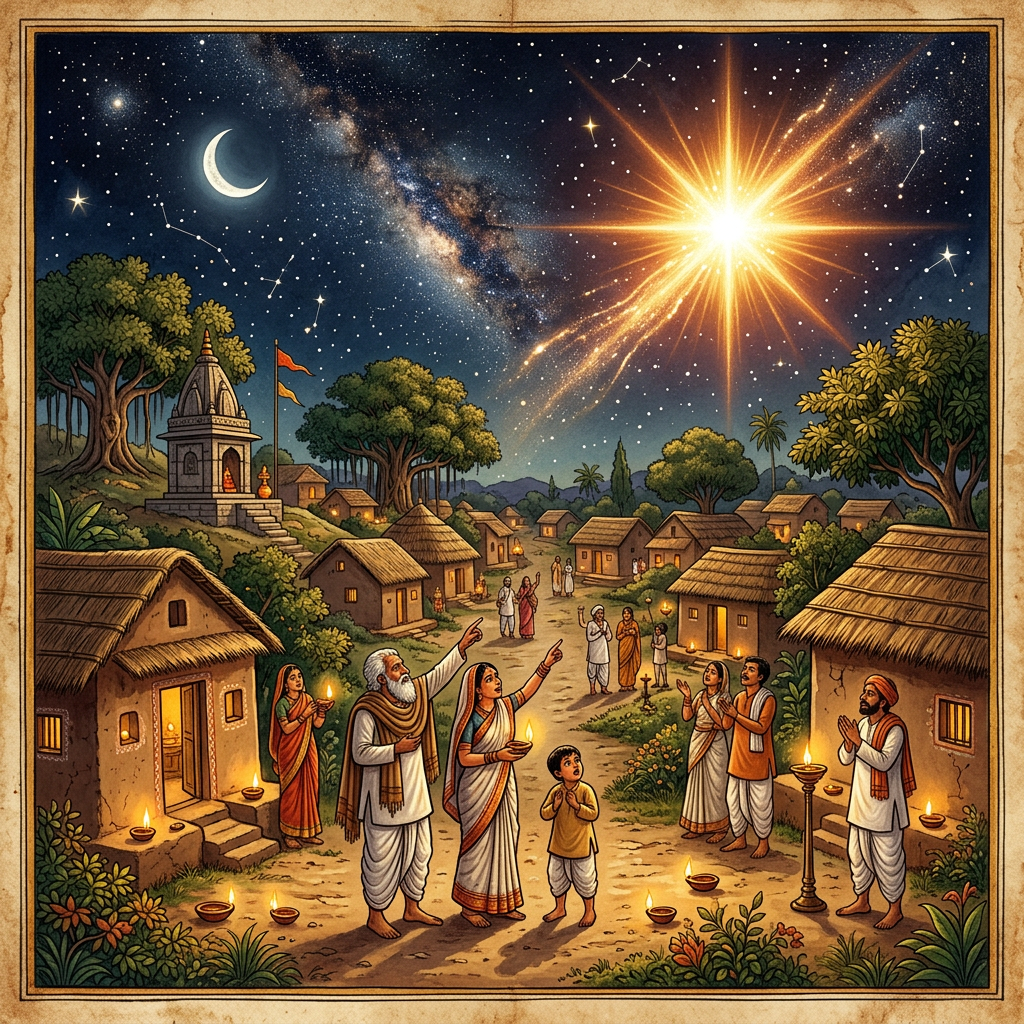
A multidisciplinary team of astronomers and Sanskrit scholars has published a study in Astrophysical Journal Letters identifying a potential real-world event behind several 'Puranic' astronomical metaphors. By running high-resolution galactic simulations, the team identified a Type Ia Supernova that would have been visible in the northern hemisphere around 4500 BCE. The brightness and position of this event correlate precisely with descriptions of a 'second sun' found in early Vedic-era lore.
The research suggests that ancient Indian observers maintained a meticulous oral record of significant celestial events, which were later encoded into the metaphors of the Puranas. This study provides a rare bridge between archaeoastronomy and classical literature, suggesting that the chronological depth of Indian astronomical observation extends much further back into the Neolithic than previously recognized by mainstream science.