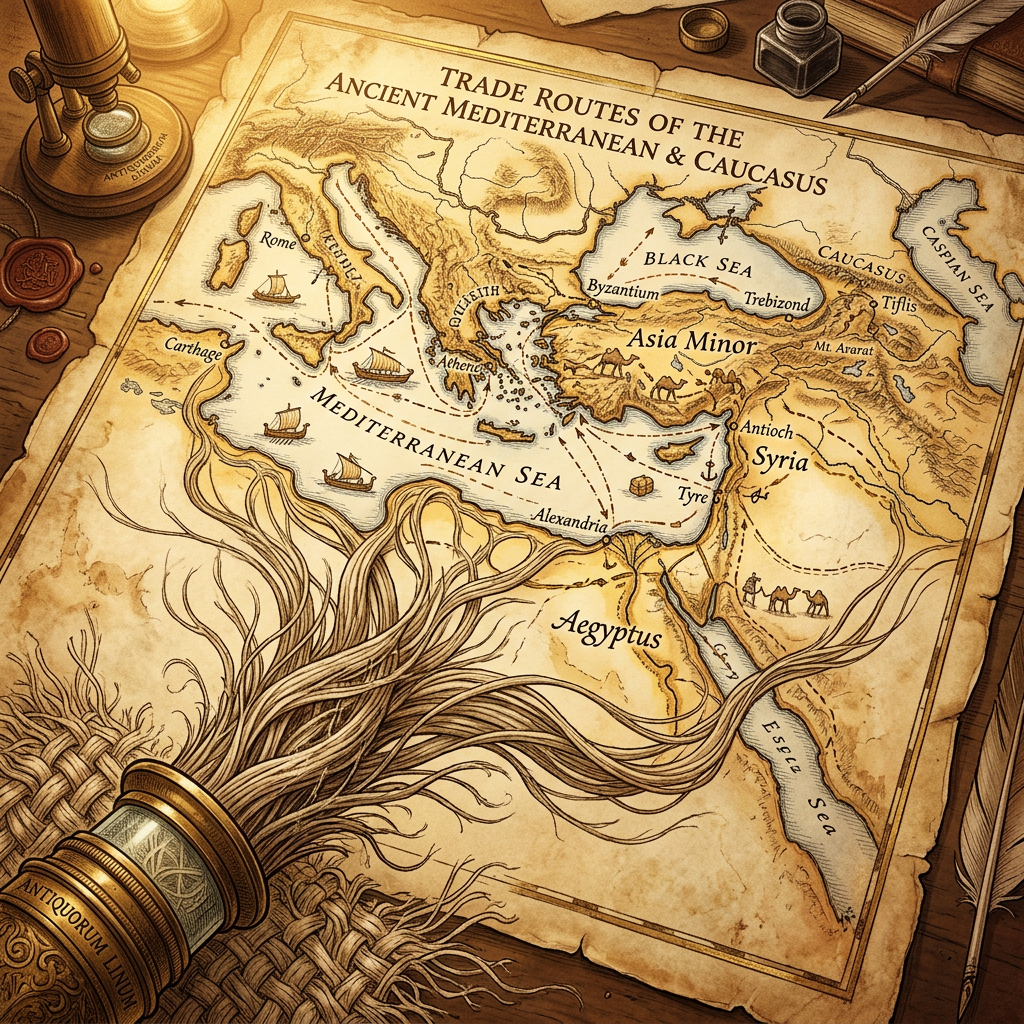
A revolutionary study of ancient DNA extracted from linen bandages found in Middle Kingdom tombs has revealed a previously unknown trade link between Egypt and the Caucasus region. The genomic mapping shows that the flax varieties used in high-quality Egyptian textiles were genetically identical to those domesticated in the foothills of the Great Caucasus, implying a sophisticated maritime and overland supply chain for raw fibers.
The research, led by a consortium of European and Middle Eastern universities, suggests that the 'Linen Route' was as economically significant as the later Silk Road. This exchange of agricultural technology and raw materials helped fuel the textile revolution that defined Egyptian elite culture. The findings are expected to redraw maps of early Bronze Age commerce across the Eastern Mediterranean.