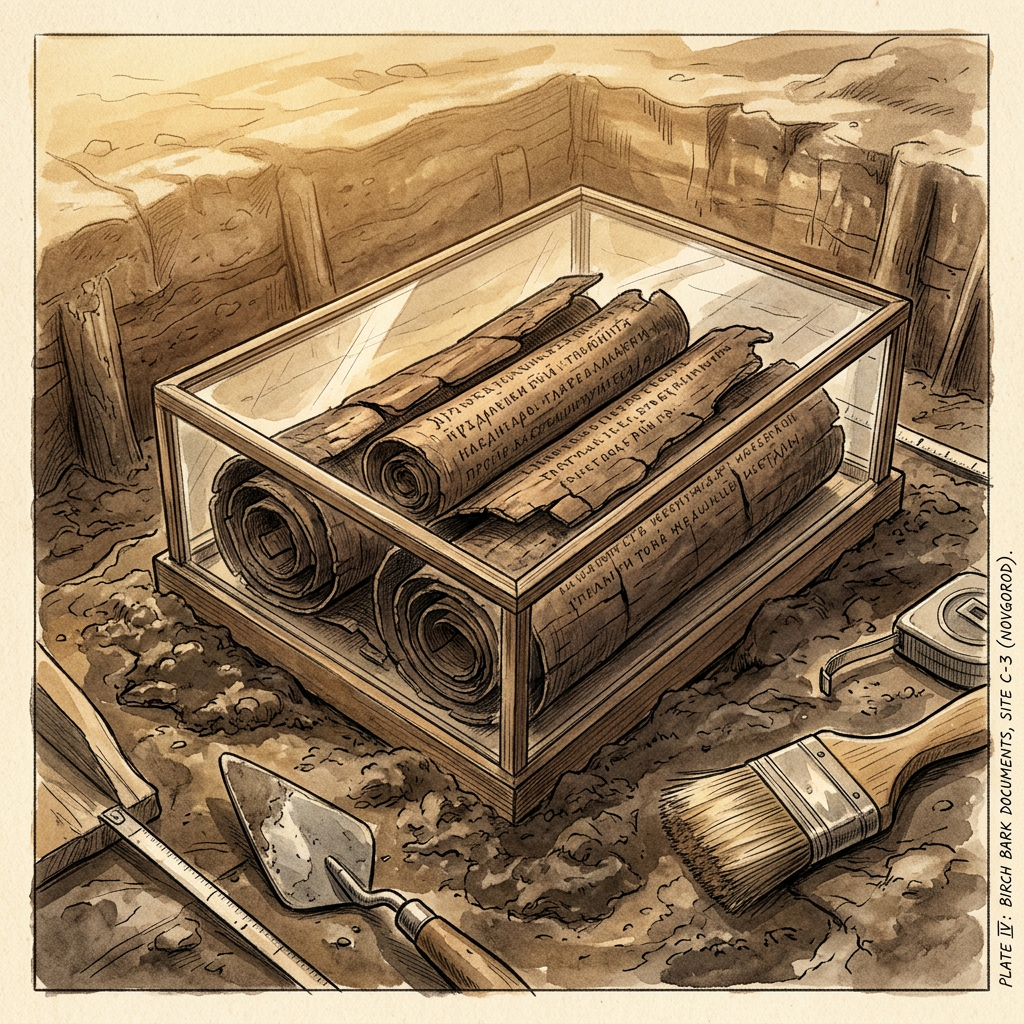
In the rugged terrain of the Swat Valley, Pakistan, excavations have uncovered the foundations of a 2nd-century BCE building identified as an Indo-Greek scriptorium. The site yielded dozens of carbonized birch-bark manuscript rolls written in a mixture of Greek and Kharosthi scripts, detailing philosophical debates and logistical records.
This find provides tangible evidence of the deep cultural synthesis between the Hellenistic world and the Mauryan influences of the Indian subcontinent. Historians believe the manuscripts may contain lost works by local scholars who flourished under the rule of Menander I, bridging the intellectual gap between the East and West.