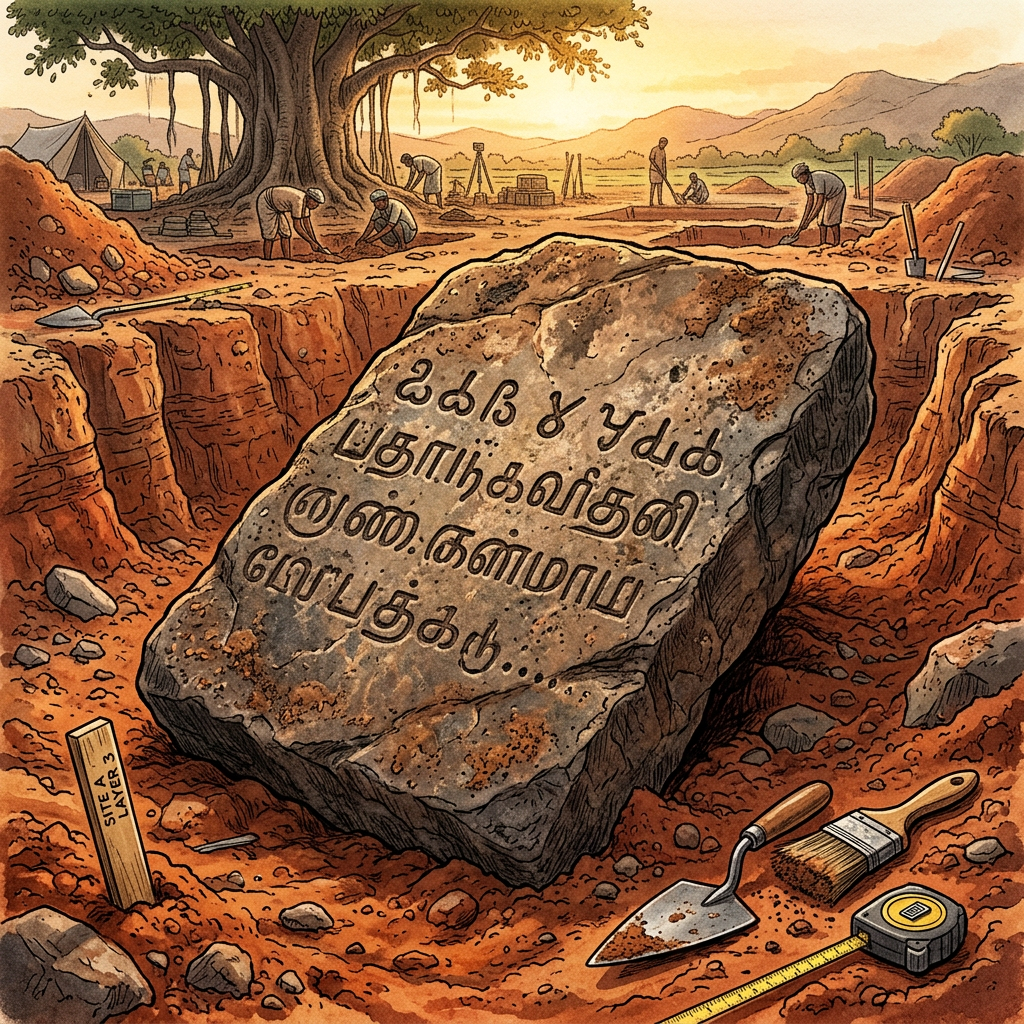
Recent excavations near Madurai have led to the decipherment of stone inscriptions dating back to the 4th Century BCE. Termed the 'Aram-Niti', these inscriptions represent some of the earliest documented secular ethical frameworks in South India. Unlike contemporary religious texts, these records focus primarily on civic virtue, social equity, and the moral responsibilities of the householder within a growing urban society.
Epigraphists note that the language used reflects a proto-Tamil dialect with early Brahmi characters. The discovery is significant because it suggests that sophisticated philosophical systems regarding communal ethics were well-established in the region long before the heavy influence of northern pedagogical traditions. The find is expected to provide new context for the ethical foundations seen later in the Sangam literature.