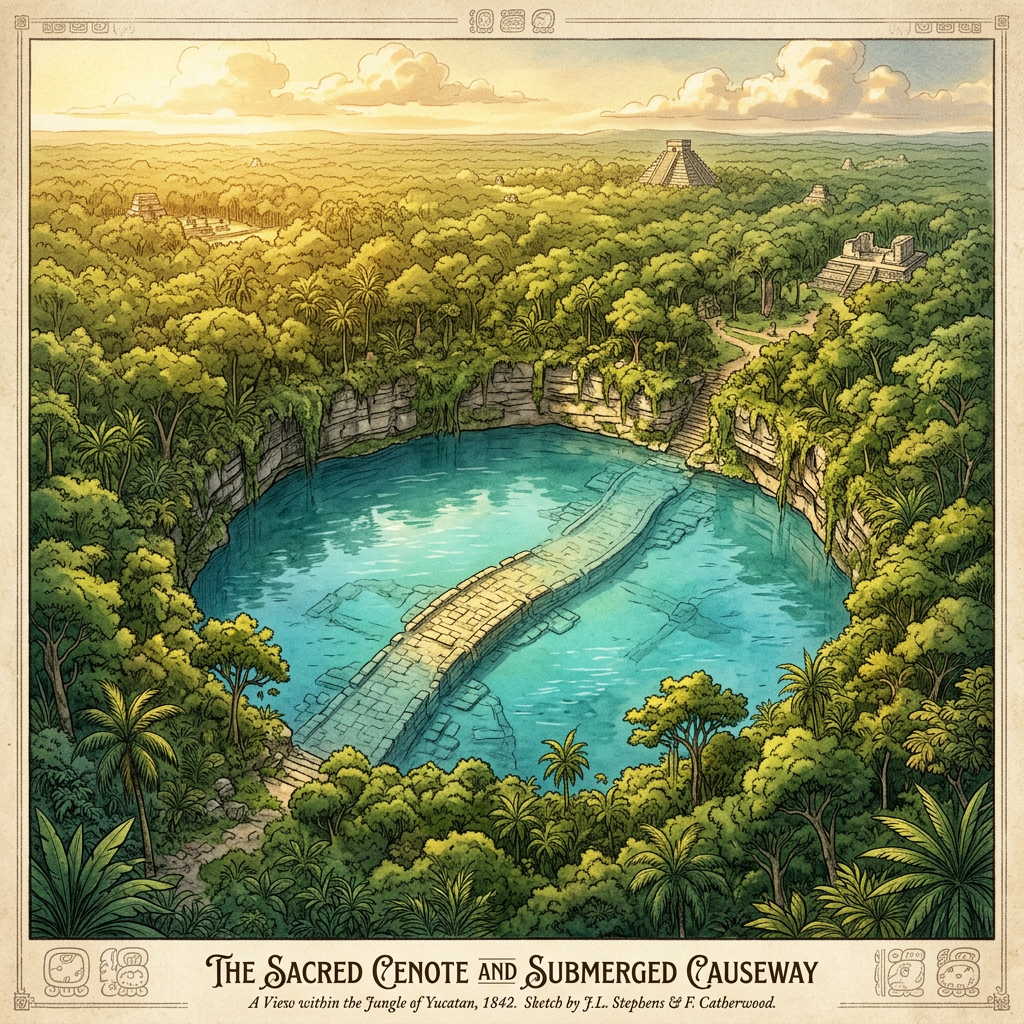
A high-resolution LiDAR survey over the dense jungles of the Peten Basin has revealed a sprawling, previously undocumented Maya complex centered around a limestone sinkhole or 'sacred lake.' Researchers have identified a massive stone causeway that terminates at the water's edge, leading to a submerged monolithic altar currently resting ten feet below the surface. Preliminary underwater exploration has yielded ceramic offerings dating to the Late Pre-Classic period.
The site, named K’o Ha (The Spirit of Water), appears to have served as a major regional pilgrimage center for water-related rituals. Surrounding the lake are at least twelve small pyramidal structures and an expansive residential zone that suggest the site supported a permanent population of priests and artisans. The discovery underscores the sophisticated hydraulic engineering and spiritual landscape management utilized by the early Maya to navigate seasonal droughts.