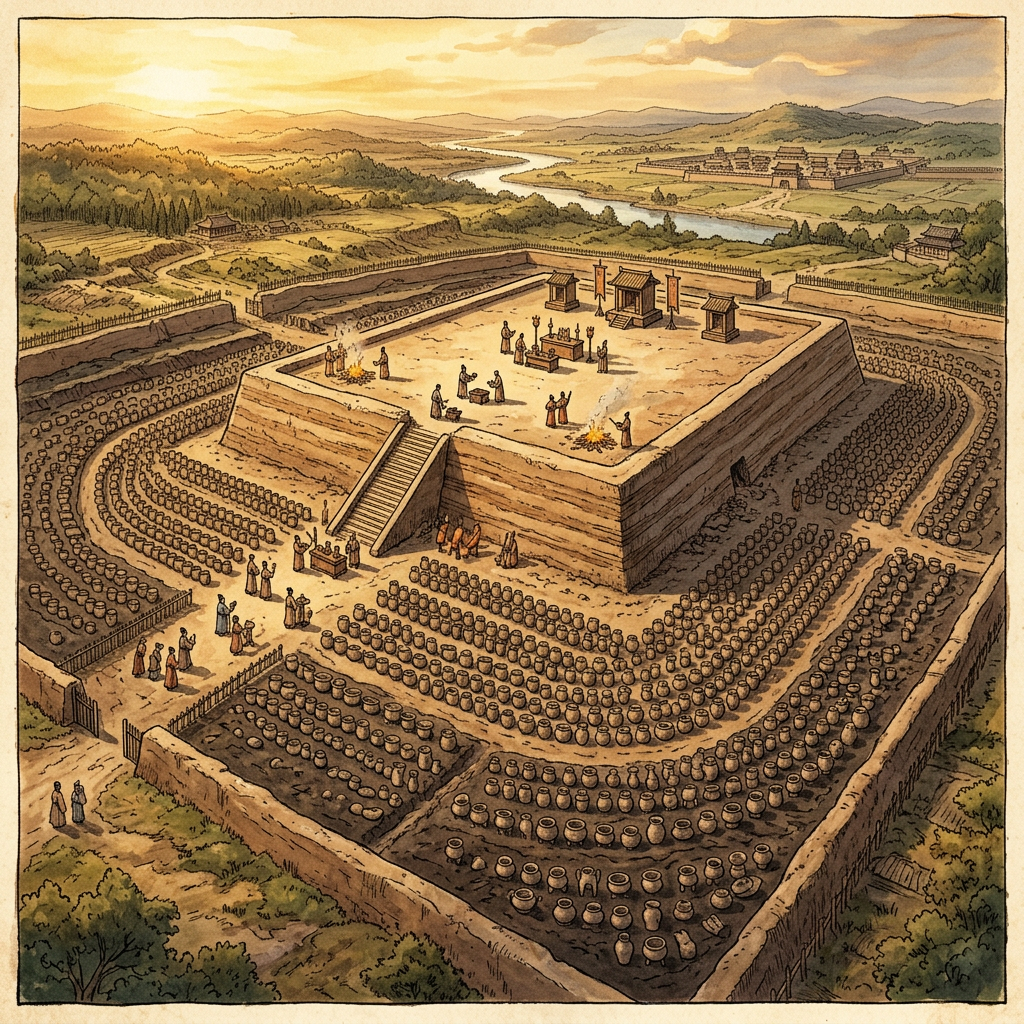
In Henan Province, researchers have identified a large, rammed-earth ceremonial platform dating to the Shang Dynasty that served as a central hub for the earliest recorded "Ghost Feast" rituals. The site is characterized by thousands of small ritual pottery vessels arranged in concentric circles, which were used to offer food and rice wine to the spirits of the deceased during the lunar seventh month.
Chemical analysis of the vessels revealed traces of fermented millet and seasonal fruits, suggesting a direct link to the modern Zhongyuan (Hungry Ghost) Festival. This discovery provides a rare archaeological anchor for a tradition that has been celebrated for millennia, showing that the practice of communal ancestral feeding was a cornerstone of early Chinese state-building and religious life.