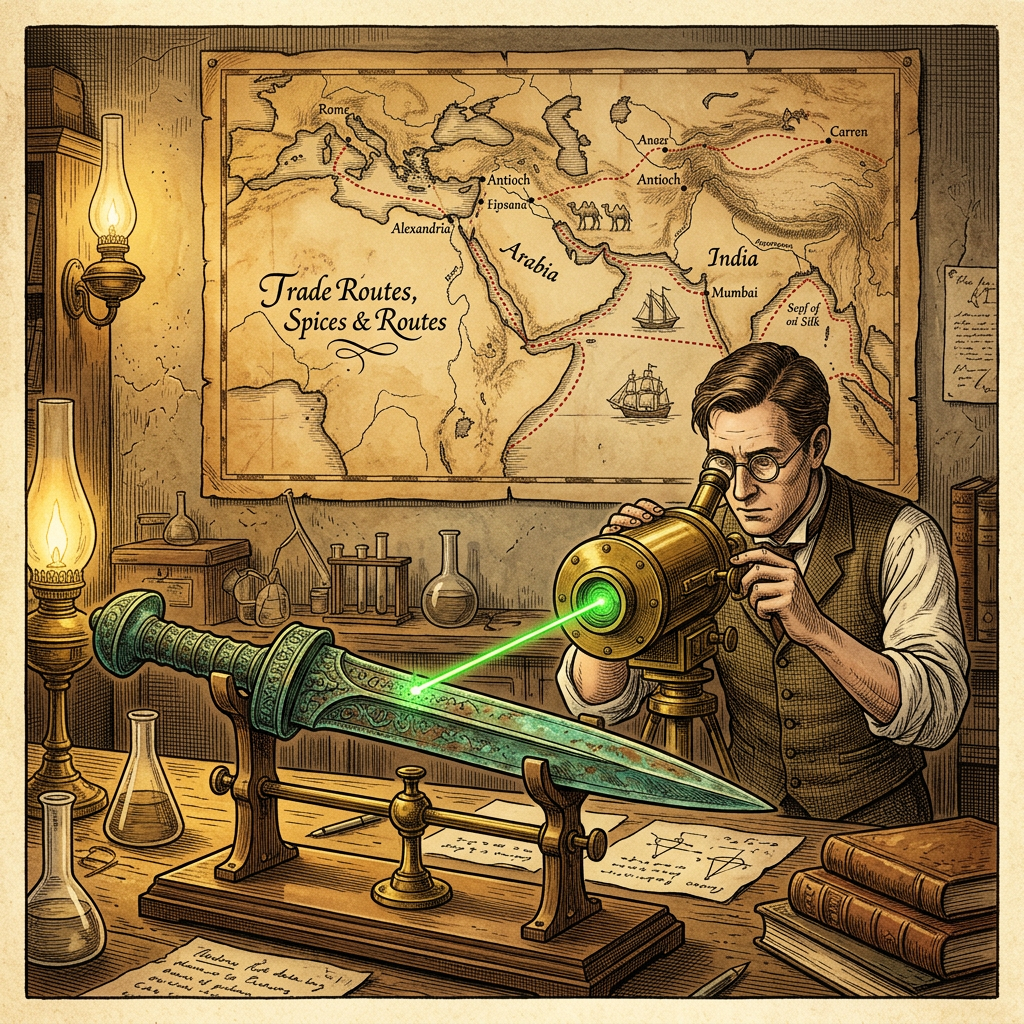
Research published in the Journal of Anthropological Archaeology has revealed that Iron Age communities in the Vaigai Valley of Southern India were part of a much more extensive global trade network than previously thought. Using lead isotope fingerprinting, scientists analyzed copper and bronze artifacts from the 1st millennium BCE, discovering that a significant portion of the tin used in their production originated from mines in the Mediterranean and the Iberian Peninsula.
This study challenges the traditional view of isolated regional development, suggesting that the 'South Indian Iron Age' was deeply integrated into maritime exchange routes that spanned thousands of miles. The presence of these specific isotopes confirms that the sophisticated metallurgy of the ancient Tamil kingdoms was supported by long-distance procurement of essential metals, predating the Roman trade era by several centuries.