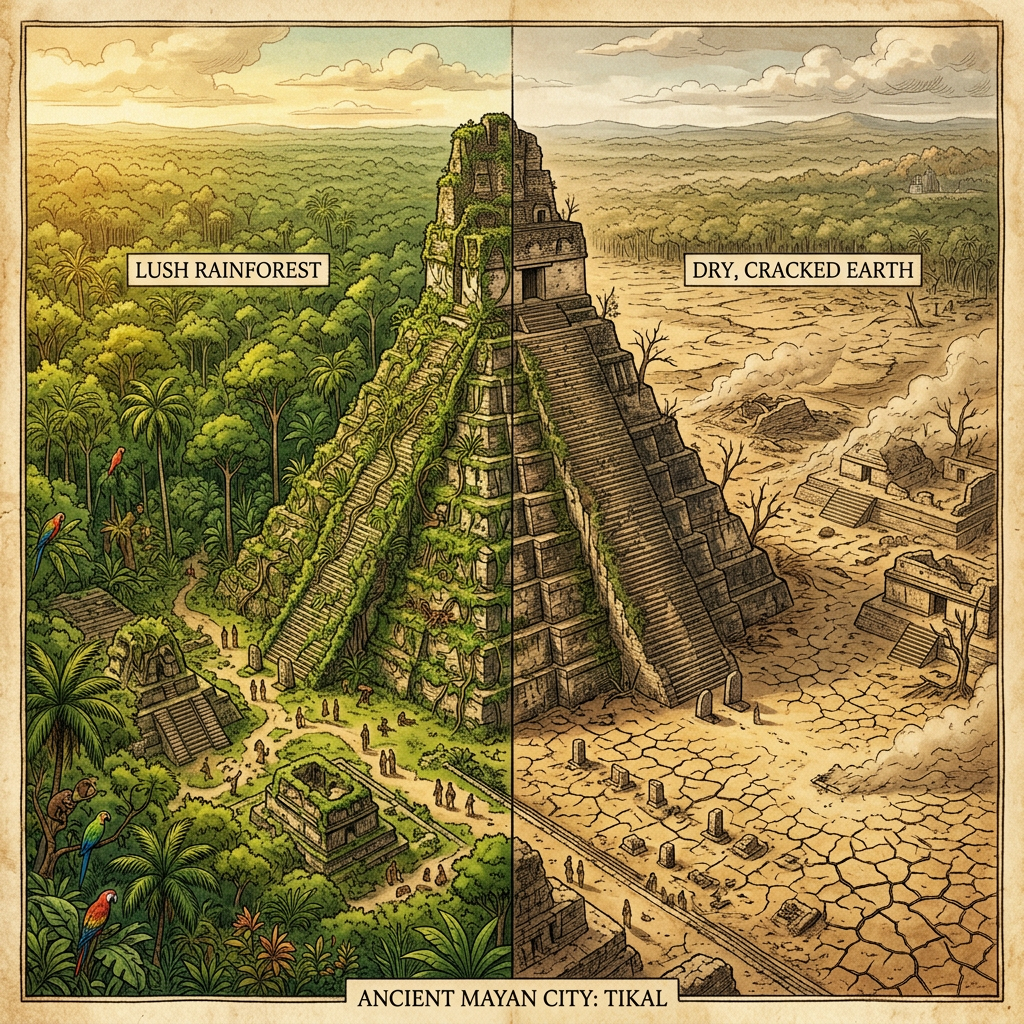
A high-resolution paleoclimate study published in PNAS provides new evidence linking the collapse of several Mesoamerican urban centers between 800 and 1000 CE to a century-long southward shift of the Intertropical Convergence Zone (ITCZ). Using stalagmite records from caves in the Yucatan Peninsula, researchers identified a period of extreme rainfall volatility that disrupted the sophisticated hydraulic systems upon which these civilizations relied.
The data suggests that the failure of maize agriculture was not due to a single drought, but rather a sequence of unpredictable 'false starts' to the monsoon season over several generations. This atmospheric instability likely triggered social fragmentation and the eventual migration of populations away from ceremonial centers into more climate-resilient coastal regions.