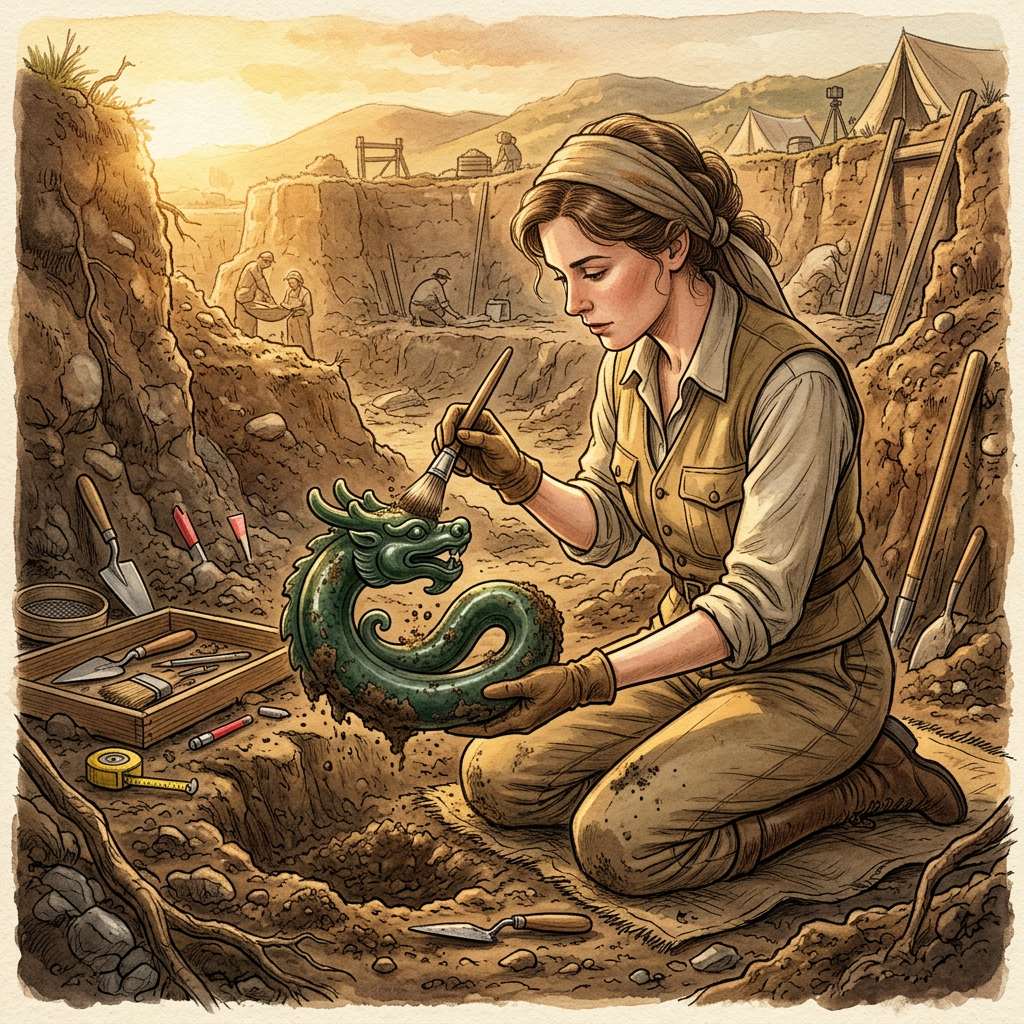
Excavations at a new Neolithic site in the Aohan Banner region have revealed a monumental ceremonial center belonging to the Hongshan culture. The site features a series of stone-piled tombs and a central circular altar. Within the primary burial, archaeologists discovered three large C-shaped jade dragons, among the most refined examples ever found. These artifacts suggest that the origins of Chinese dragon iconography were already deeply established 5,000 years ago.
The ritual center also contained evidence of astronomical alignments, with the stone platforms oriented toward the sunrise on the spring equinox. Analysis of the surrounding soil revealed high concentrations of pigments, suggesting that the stone structures were once painted in vibrant colors for community rituals. This find underscores the complexity of Neolithic societies in Northern China and their sophisticated spiritual connection to the natural and celestial worlds.