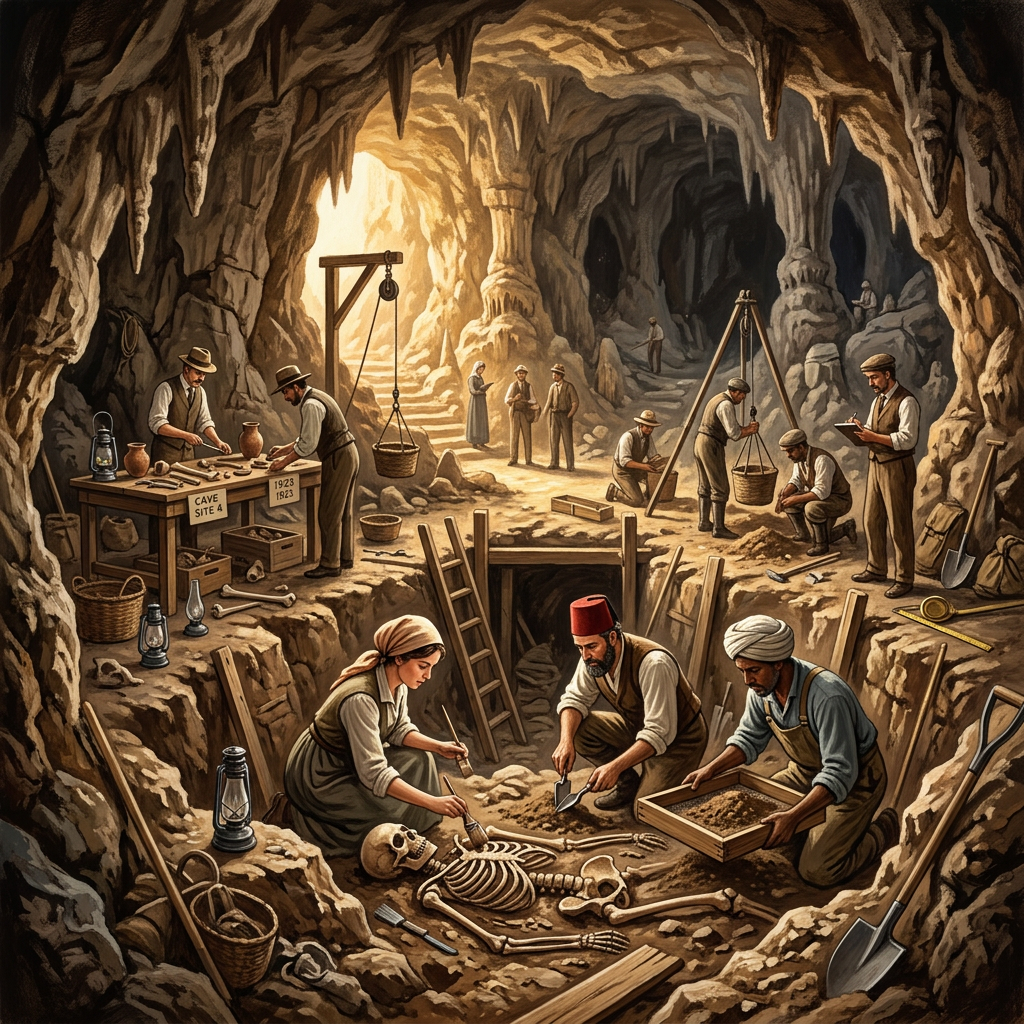
Paleogenomic researchers have sequenced DNA from remains found in a limestone cave in the Atlas Mountains, revealing a previously unknown 'ghost' lineage that existed at the end of the Pleistocene. This genetic group is distinct from both the early Levantine farmers and the sub-Saharan African populations that later migrated into the region, suggesting a complex history of isolation.
The findings indicate that North Africa served as a significant refugium during the Last Glacial Maximum, where isolated populations developed unique genetic markers for arid climate survival. This study provides a crucial piece of the puzzle regarding the ancestry of modern Maghreb populations and their deep evolutionary roots in the Ibero-Maurusian cultural complex.