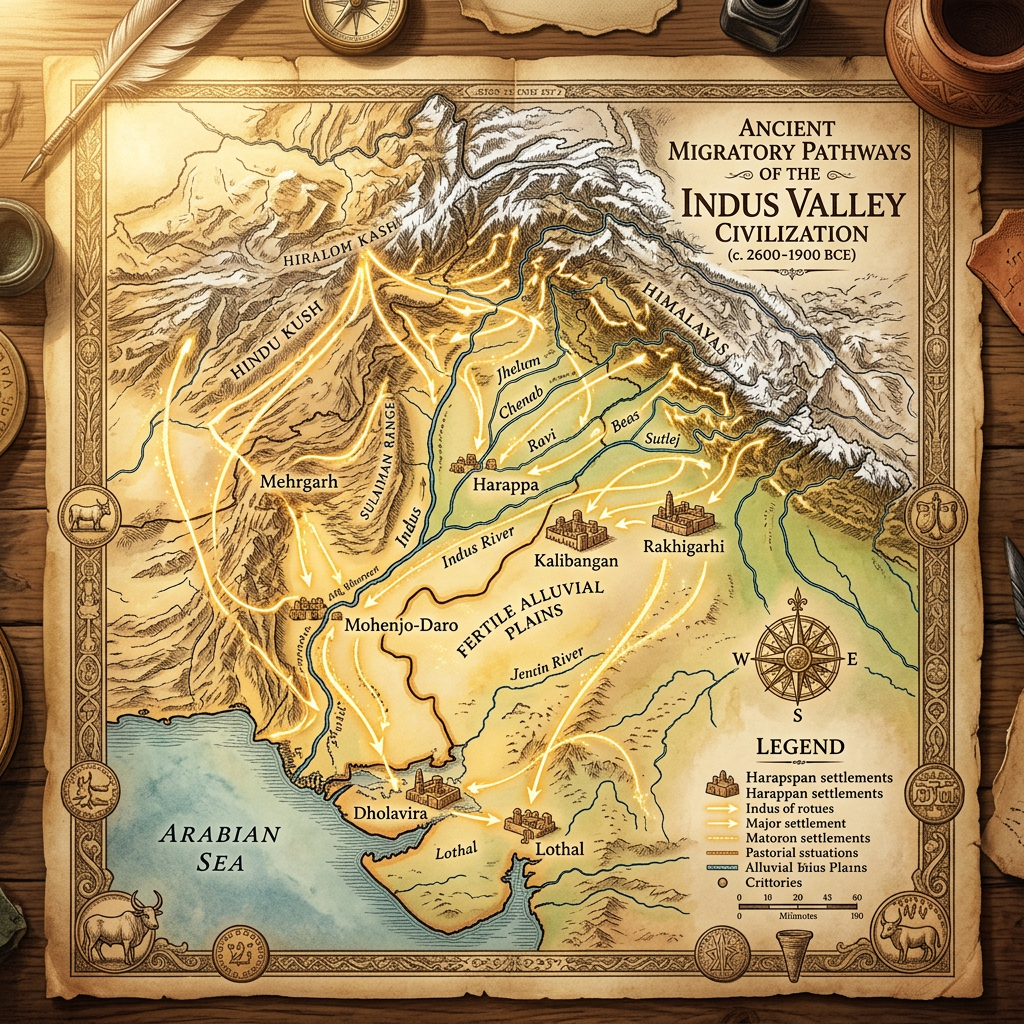
A new methodology utilizing high-precision strontium-isotope mapping has allowed archaeologists to track the seasonal migration patterns of Neolithic populations in the Indus Valley with unprecedented detail. By analyzing tooth enamel from early settlements in Mehrgarh, researchers identified specific catchment areas for pastoralists, revealing a much wider trade and movement network than previously thought.
This research provides the first direct evidence of long-distance transhumance between the highlands of Balochistan and the alluvial plains as early as 7,000 BCE. The study indicates that the foundations of the Indus urban system were built upon these highly mobile, interconnected social structures that optimized resource use across different ecological zones.