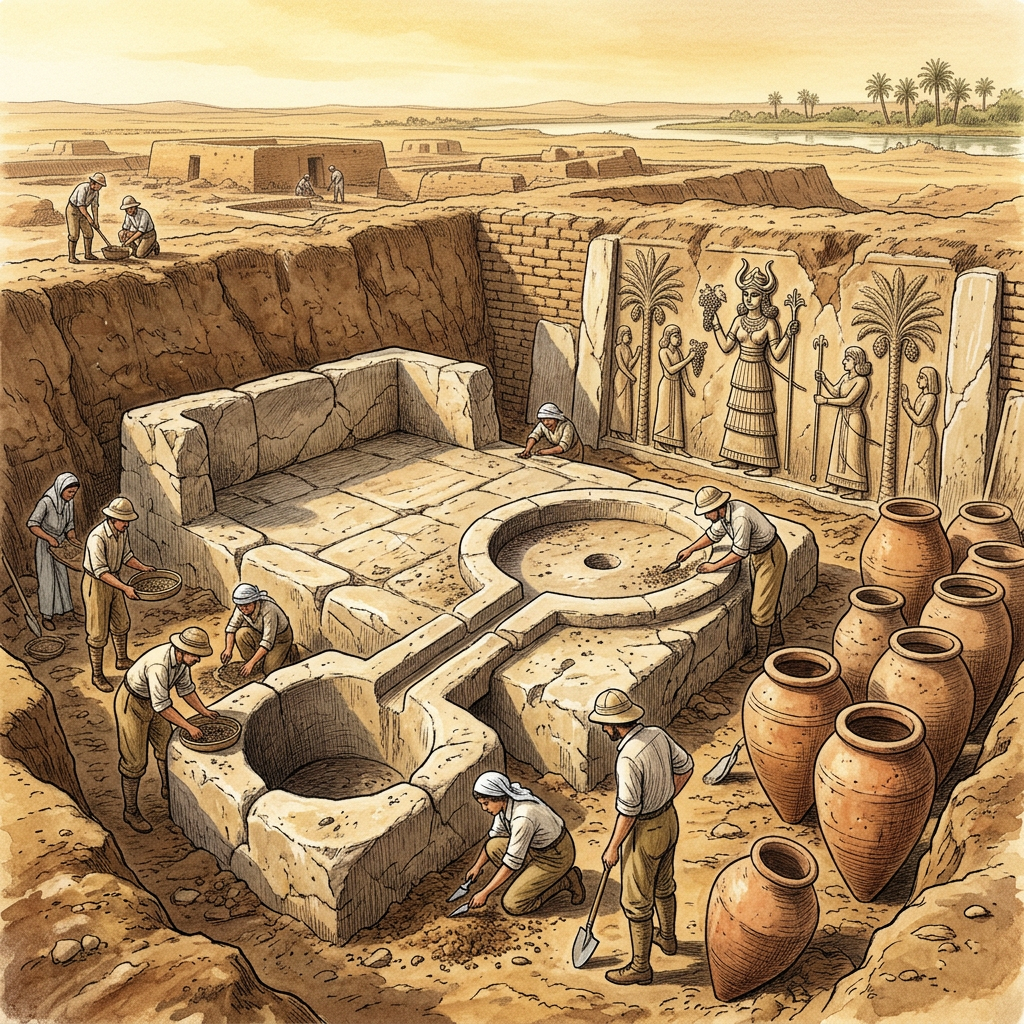
A joint team of Iraqi and Italian archaeologists has excavated a monumental sanctuary complex near Nineveh, featuring a series of industrial-scale wine presses and ceremonial basins dating back to the Neo-Assyrian and Parthian transitions. The site provides the first physical evidence of a centralized production zone specifically dedicated to providing libations for the Festival of Ishtar, a major spring celebration of fertility and warfare.
Evidence found at the site includes carved relief panels depicting the goddess Ishtar receiving offerings of wine, as well as several storage jars containing chemical signatures of honey-infused wine. Researchers believe this sanctuary served as a sacred 'vintner' for the city, where the preparation of ritual beverages was as much a religious act as an economic one, cementing the link between agricultural cycles and divine favor.