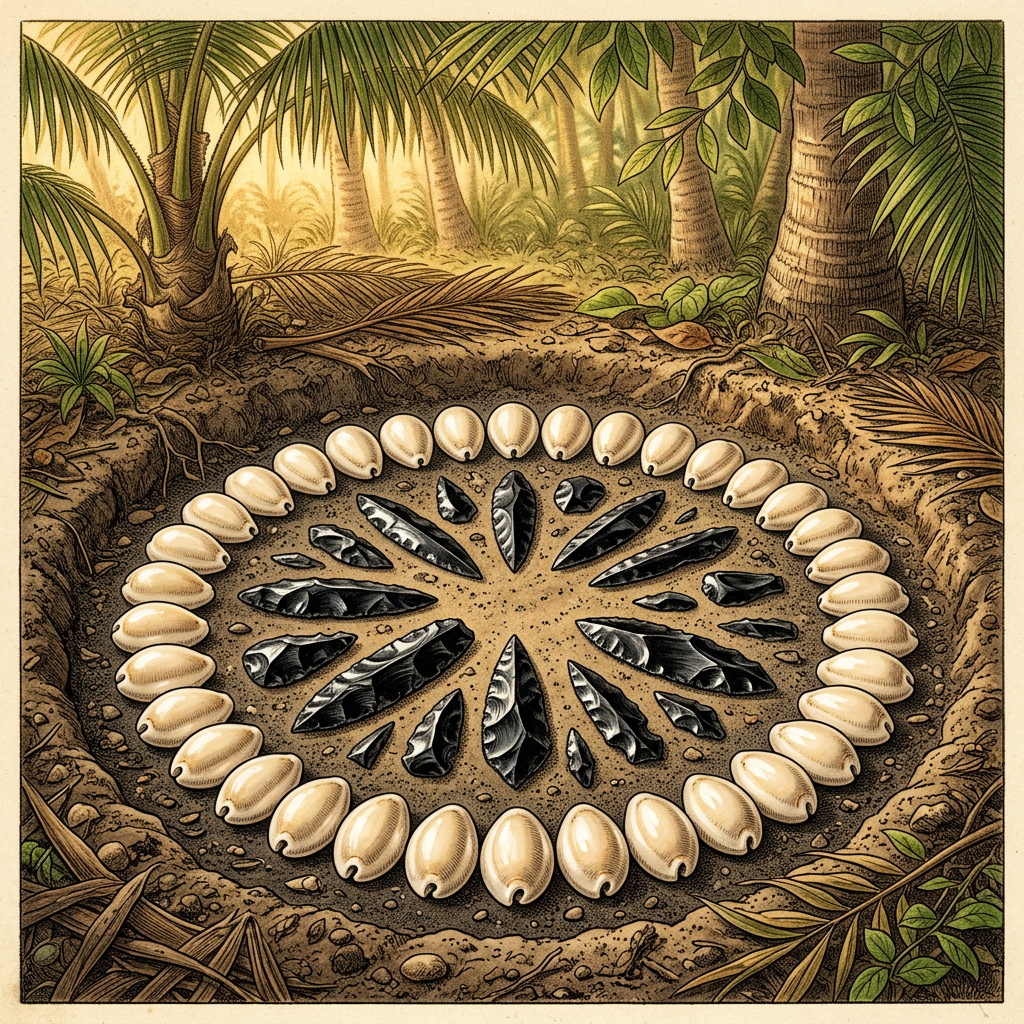
A new excavation on the island of Viti Levu has uncovered a massive deposit of Kauri shells and obsidian tools arranged in a circular pattern, dating back to the Lapita culture. Researchers suggest this site was a focal point for maritime navigation festivals, where seafaring communities would gather to bless their canoes before long-distance voyages. The specific placement of the shells corresponds to the seasonal migration patterns of whales, suggesting a deep ecological awareness integrated into their spiritual life.
The discovery provides a rare glimpse into the ritual origins of Pacific voyaging. By analyzing the wear patterns on the obsidian, archaeologists have determined that these tools were used for ceremonial scarification and the carving of wooden totems during the festival. This provides physical proof that the cultural heritage of Polynesian navigation was founded on a foundation of communal seasonal gatherings and shared ritual knowledge.