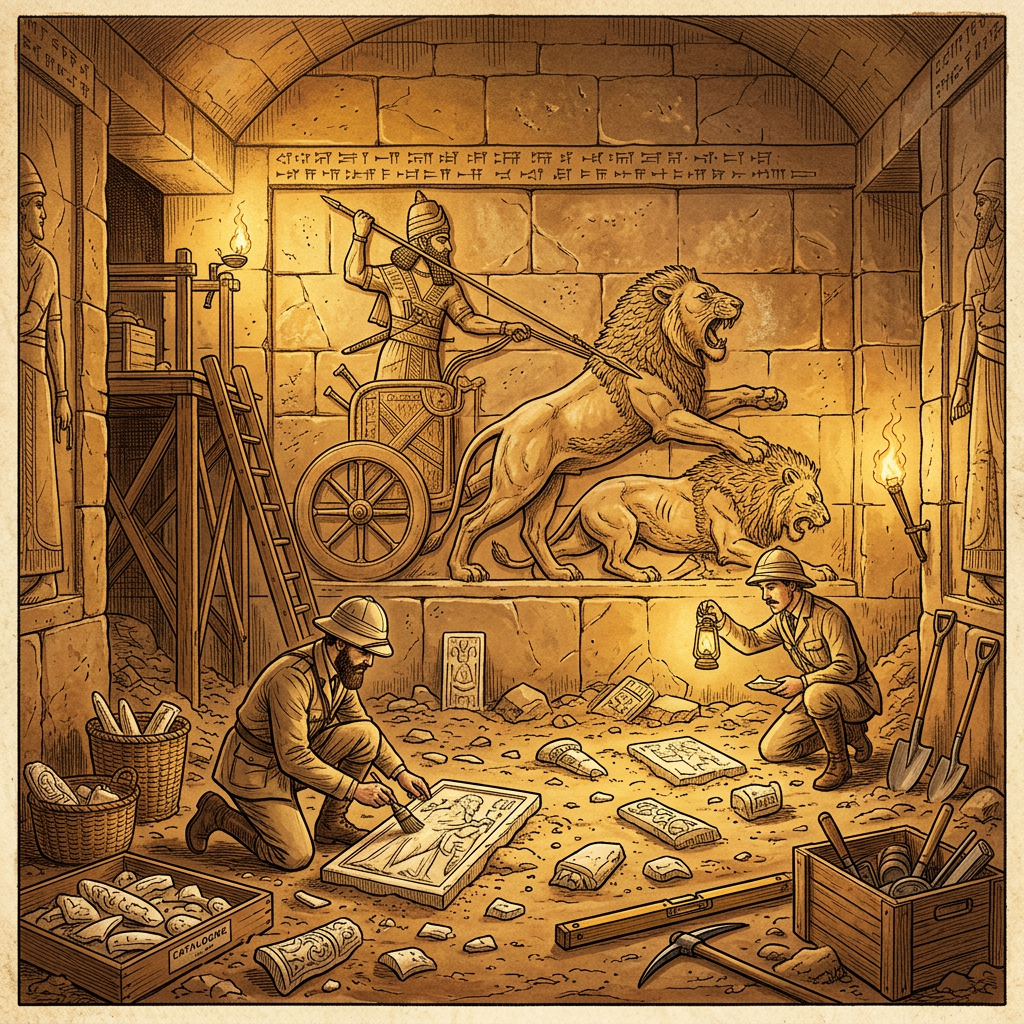
In a major breakthrough for Mesopotamian archaeology, researchers at the site of Ancient Calah (modern Nimrud) have unearthed a previously hidden subterranean chamber belonging to the palace of Ashurnasirpal II. The room is being hailed as the 'Ivory Throne Room' due to the overwhelming quantity of carved ivory inlays and furniture fragments found scattered across the floor. These ivories, depicting lions, sphinxes, and lotus blossoms, were likely used to decorate the king's ceremonial seating and royal beds.
The walls of the chamber are lined with massive limestone bas-reliefs that have retained faint traces of their original pigment. These reliefs depict the king engaged in a ceremonial lion hunt, with high-relief details showing the tension of the bows and the musculature of the horses. This discovery is particularly significant given the widespread destruction the site suffered in previous decades, proving that many of Calah’s architectural treasures remain safely protected beneath the layers of debris.