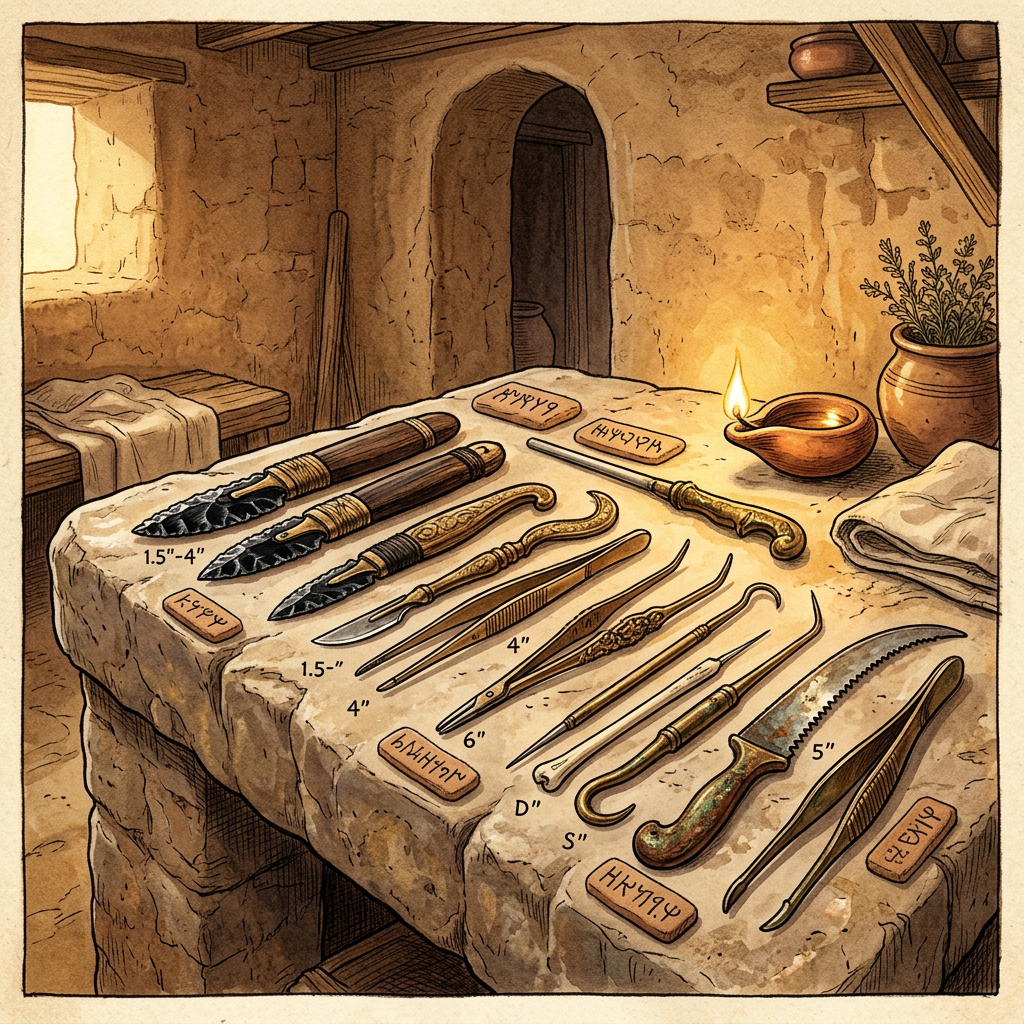
New excavations on the western perimeter of the lower city at Mohenjo-Daro have revealed a specialized cluster of rooms that archaeologists believe functioned as an ancient medical or paleo-pathology clinic. The structure contains a series of small, hygienic platforms and a unique drainage system separate from the main city grid, suggesting a primitive isolation ward for treating infectious diseases or performing delicate surgical procedures.
Excavators recovered a cache of micro-drills and fine obsidian scalpels that show microscopic evidence of bone residue. Forensic analysis of skeletal remains found in a nearby communal burial ground indicates successful trepanation—a form of cranial surgery—and the setting of complex fractures that had completely healed. This discovery suggests that the Indus Valley Civilization possessed a level of medical sophistication and anatomical knowledge that rivaled, and perhaps exceeded, contemporary Mesopotamian and Egyptian practices.