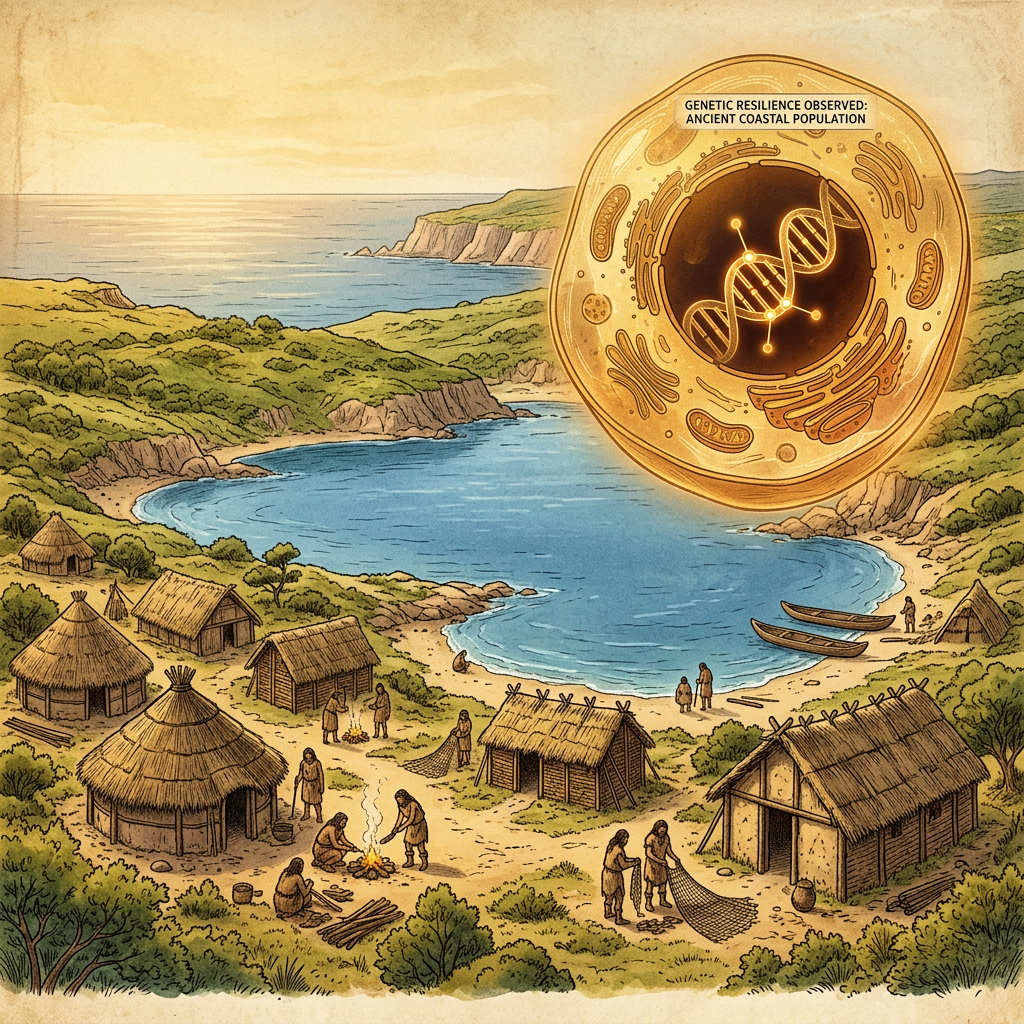
Researchers conducting excavations near the shores of Lake Chilika in Odisha have discovered skeletal remains dating back to the early Holocene. A paleogenomic analysis of the dental pulp has revealed the earliest known genetic markers for resistance to specific waterborne pathogens that thrive in brackish and saline environments. The study suggests that these early coastal foragers had developed a specialized immune response to the unique microbial landscape of the eastern Indian seaboard.
The findings indicate a long period of genetic continuity in the region, with these protective markers still present in modern coastal communities in Odisha. This research provides a new window into the 'deep time' history of human health and adaptation in the subcontinent, showing how the environment shaped the genetic heritage of the region's first maritime-adapted societies long before the rise of the first urban centers.