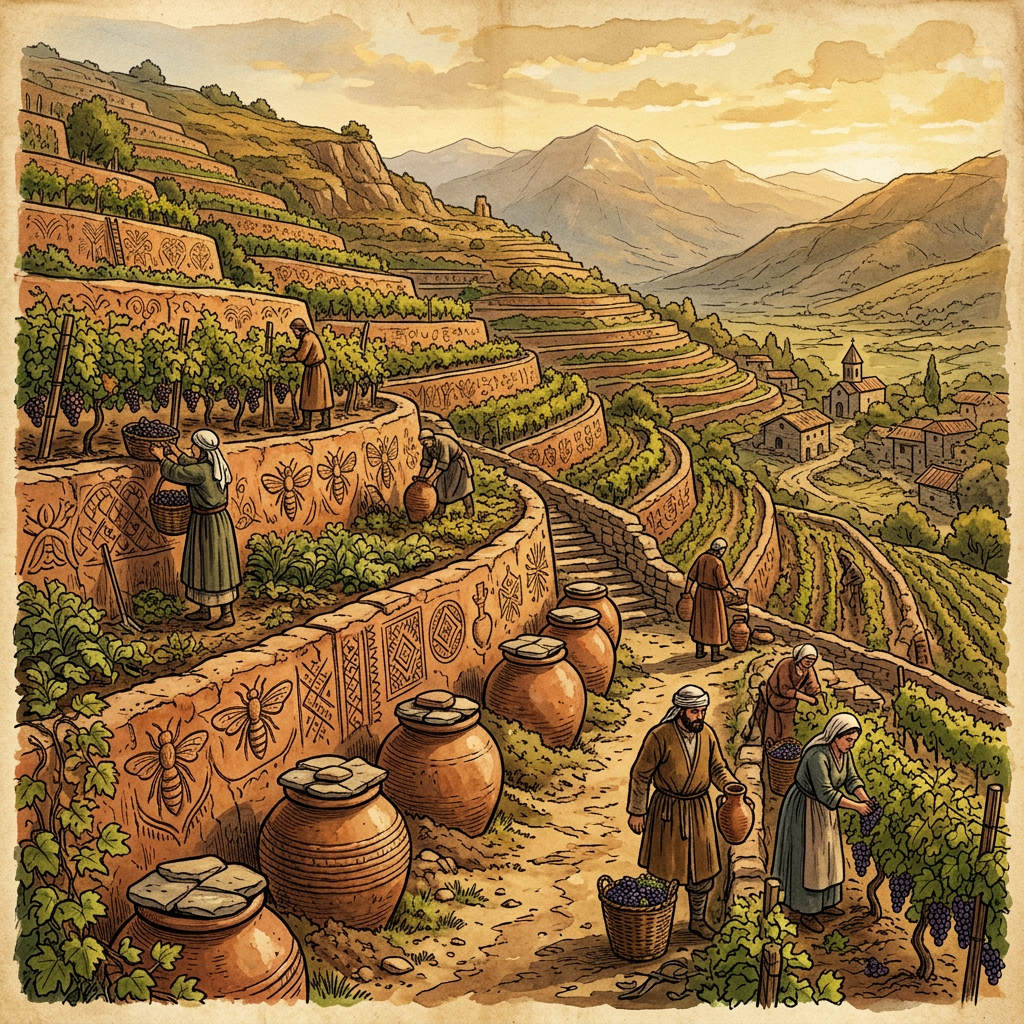
In the Kvemo Kartli region of Georgia, researchers have unearthed a series of terraced clay platforms dating back to the Kura-Araxes culture. The site features unique decorative motifs of bee wings and stylized insectile figures, leading experts to believe it was a dedicated sanctuary for an ancient "Honey-Blessing" festival. Chemical analysis of large storage jars found at the site confirmed the presence of wild flower honey and propolis used in ritual offerings.
The discovery suggests that honey was not merely a food source but a central element of a spring festival celebrating fertility and the return of life. These "Bee-Priestesses" likely led communal chants and dances designed to mimic the hum of a hive, a tradition that may have laid the spiritual groundwork for later Caucasian folk traditions surrounding the sacred nature of the apiary.