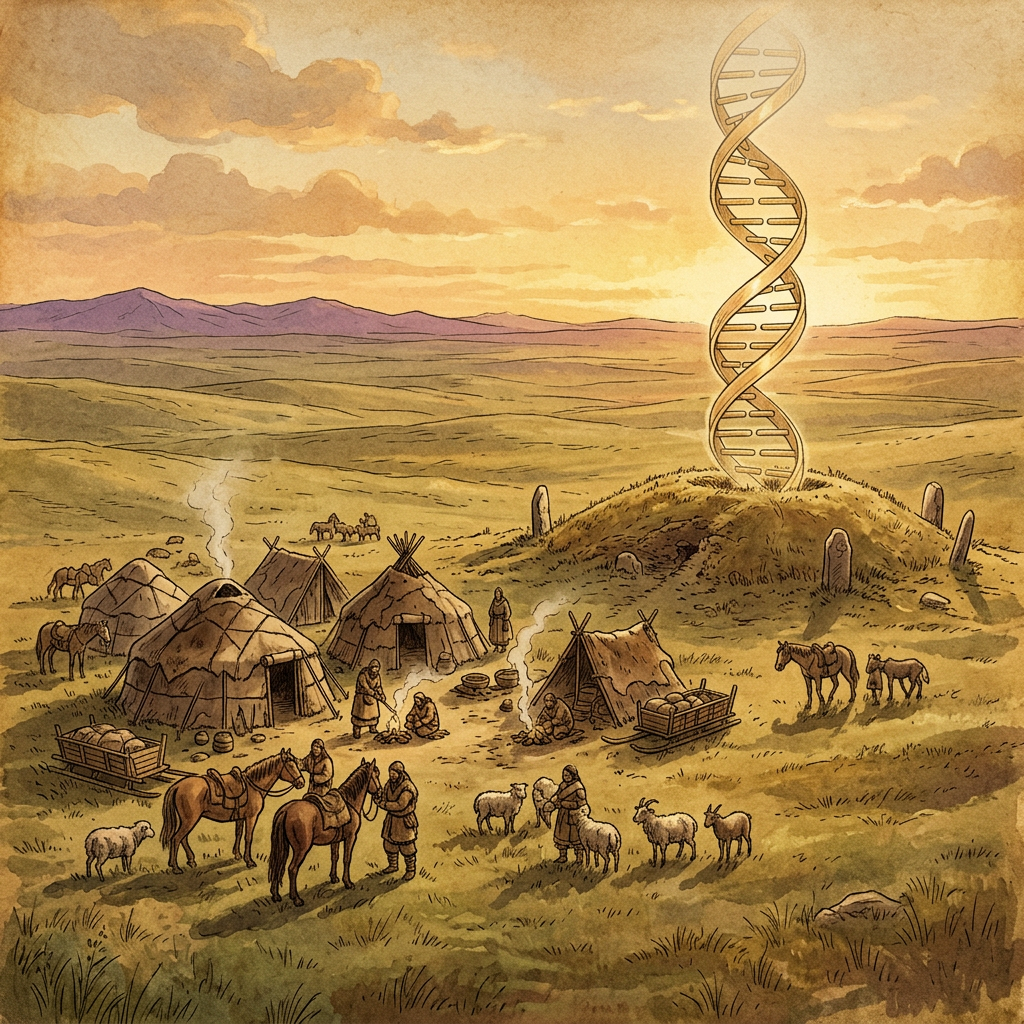
A new genetic study of Ochre Grave (Pit Grave) burials has identified specific alleles associated with long-distance endurance and localized vitamin D synthesis, markers the researchers link to the adoption of seasonal transhumance. The study suggests that the shift to mobile pastoralism in the Pontic-Caspian steppe was supported by rapid genetic adaptations to the stresses of constant movement and varying solar exposure.
By analyzing over 40 individual genomes, the team at the European Institute of Paleogenomics was able to trace the emergence of these markers to a specific 200-year window during the early 3rd millennium BCE. This provides the first biological evidence for the transition from sedentary farming to the nomadic lifestyle that would eventually define the Eurasian steppe for millennia.