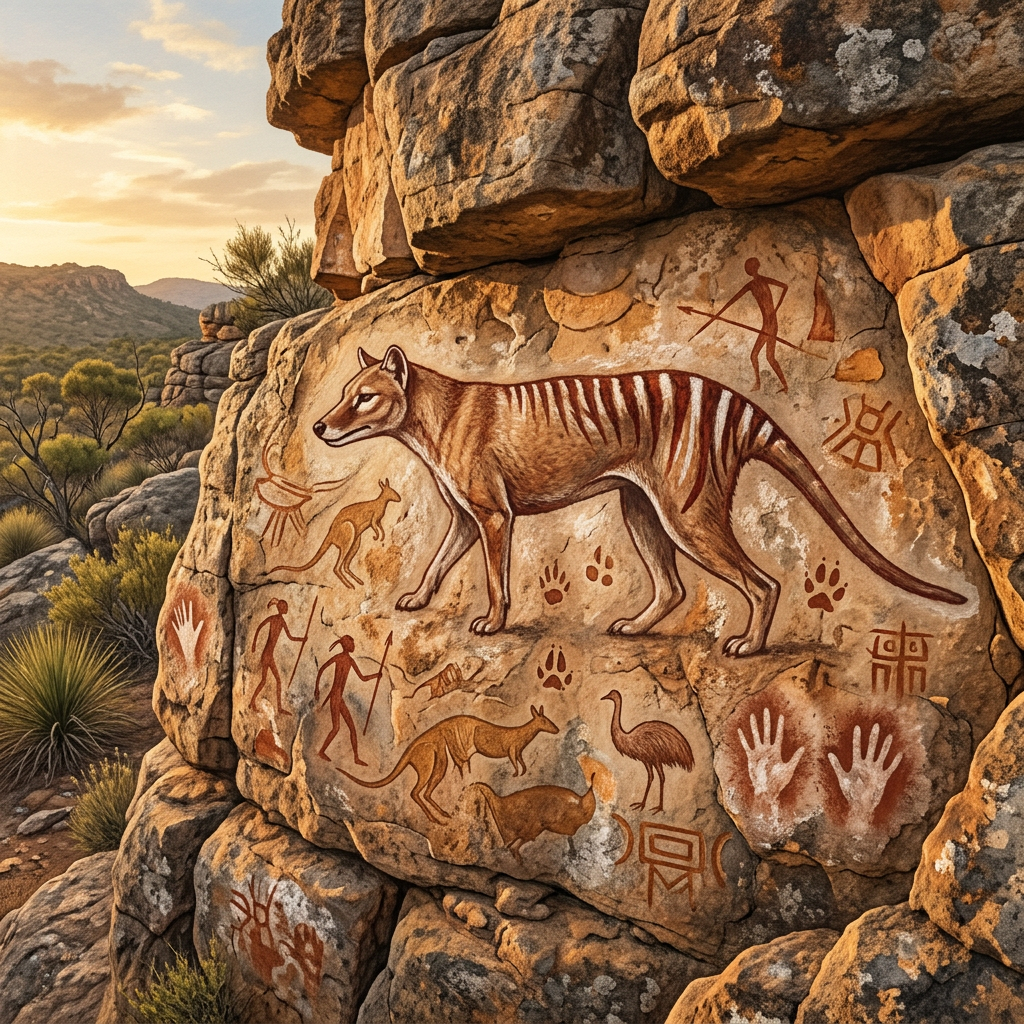
A research team led by Griffith University has documented 14 rare depictions of thylacines (Tasmanian tigers) in a remote corner of Arnhem Land, Australia. Most strikingly, advanced analysis suggests that at least two of these artworks are less than 1,000 years old. This find challenges the long-held scientific consensus that the carnivorous marsupial went extinct on the Australian mainland approximately 3,000 years ago following the introduction of dingoes.
The paintings, executed in red and yellow ochre and white kaolin pigment, depict the striped, dog-like predators with prominent snouts and long tapering tails. The recent age of the art suggests that small populations of thylacines may have persisted in the extreme landscapes of the Northern Territory until the medieval period. Indigenous co-authors of the study note that oral traditions and specific names for the creature, such as djankerrk, further support the idea that ancestors may have encountered living thylacines much later than previously believed.