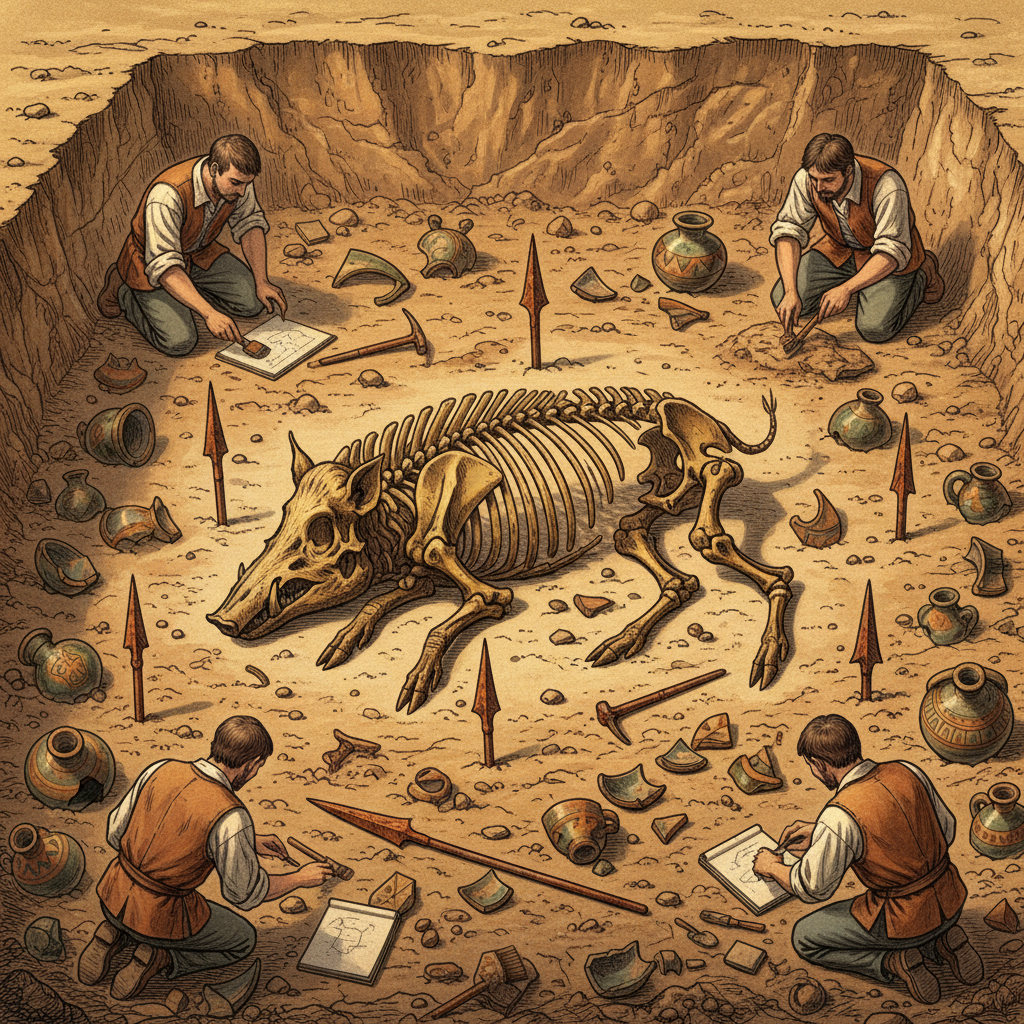
Excavations in the Harz Mountains have uncovered a series of ritual pits containing the articulated skeletons of wild boars, dated to the 3rd century CE. The positioning of the remains—facing the east—suggests these were sacrificial offerings made during a Germanic festival celebrating the transition from the winter hunting season to the spring planting cycle.
Archaeologists found that the animals had been consumed in a communal feast before their bones were carefully reassembled and buried with iron spearheads and clay amulets. This ritual behavior indicates a highly organized belief system centered on the boar as a symbol of vitality and agricultural protection, likely tied to the deity Freyr.
The find is significant for its preservation of ephemeral traditions. It offers a rare window into the localized folk practices of Germanic tribes before their conversion, showing how seasonal changes were marked by intense ritual activity and social bonding through shared consumption.