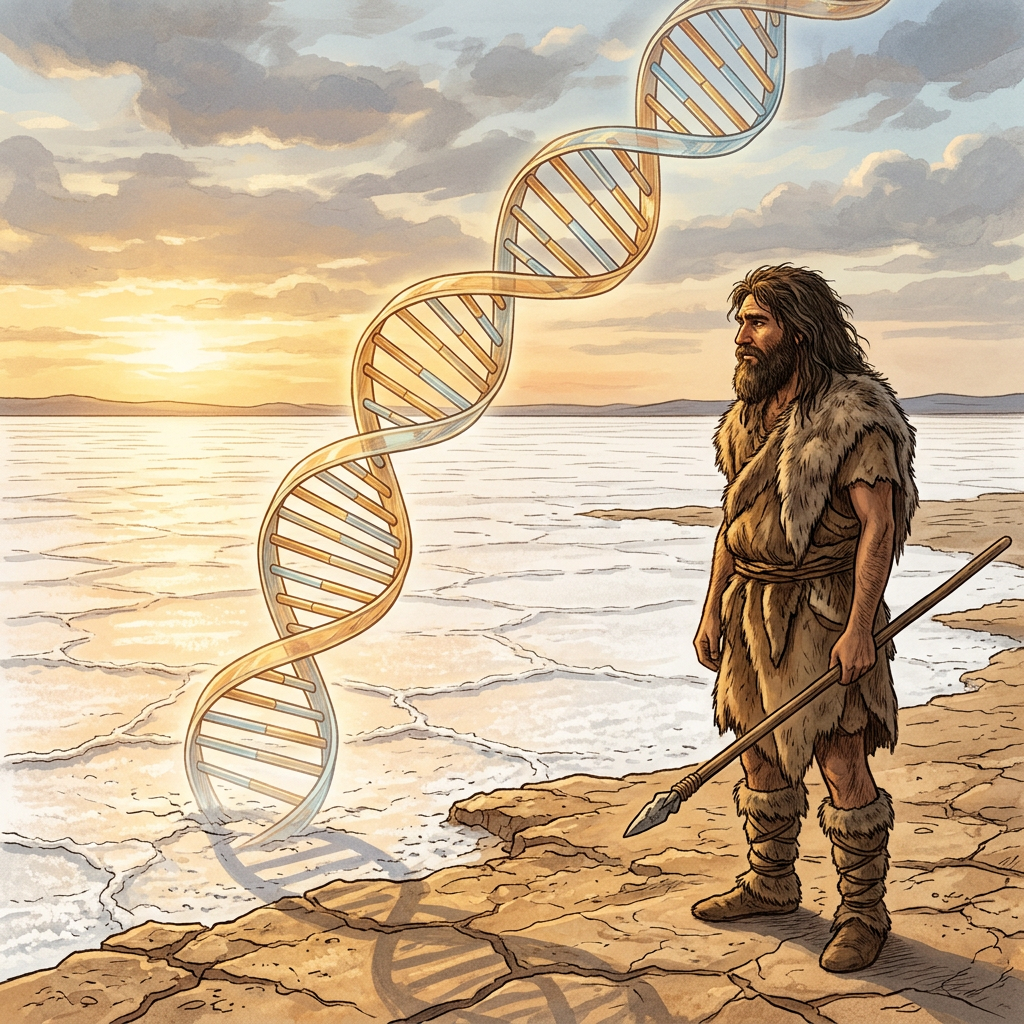
A groundbreaking paleogenomic study published in Nature Genetics has revealed that ancient populations inhabiting the Rann of Kachchh in Gujarat possessed unique genetic adaptations to survive in high-salinity environments. By sequencing the genomes of remains dating back to 6000 BCE, researchers identified a specific mutation in the SLC4A4 gene, which is critical for regulating sodium and bicarbonate levels in the human body.
The study suggests that these early coastal foragers developed this biological resilience over several millennia of living in the salt marshes. This genetic signature differentiates them from contemporary inland hunter-gatherer groups, providing new insights into the evolutionary pressures of the Indian subcontinent's unique geography. The research also tracks how this lineage eventually merged with early agriculturalists during the expansion of the Indus Valley Civilization.