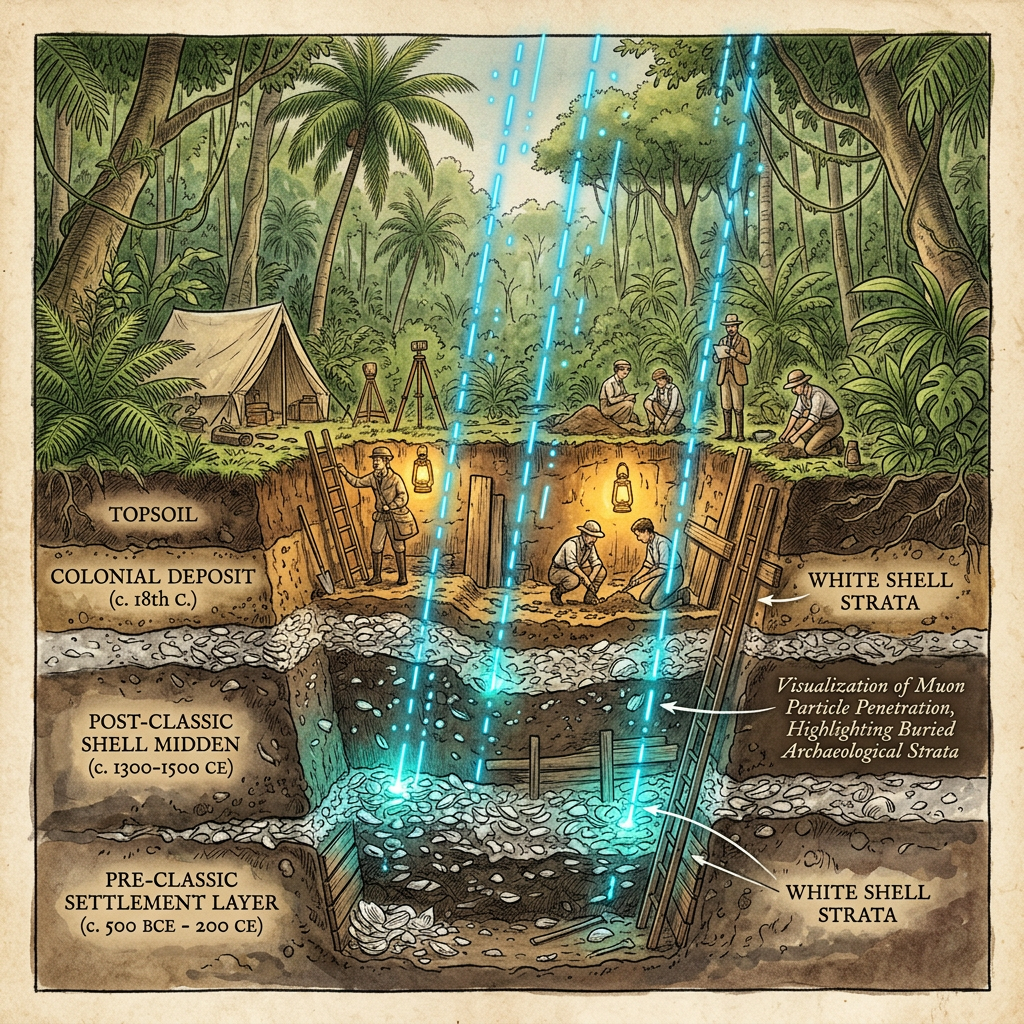
A revolutionary dating technique developed at the Tata Institute of Fundamental Research (TIFR), utilizing muon-induced Argon-39 calibration, has been applied to the ancient shell middens of coastal Kerala. This new methodology provides a more stable baseline for Carbon-14 dating in humid tropical environments where traditional calibration often fails due to atmospheric interference.
The results have pushed back the chronology of the Malabar Neolithic by nearly 800 years, placing the earliest permanent maritime settlements in the region at the late 5th millennium BCE. This suggests that coastal Kerala was a major hub of sedentary life and sophisticated shell-working industries far earlier than previously assumed, possibly acting as a precursor to the maritime trade networks that later linked India to the Red Sea.