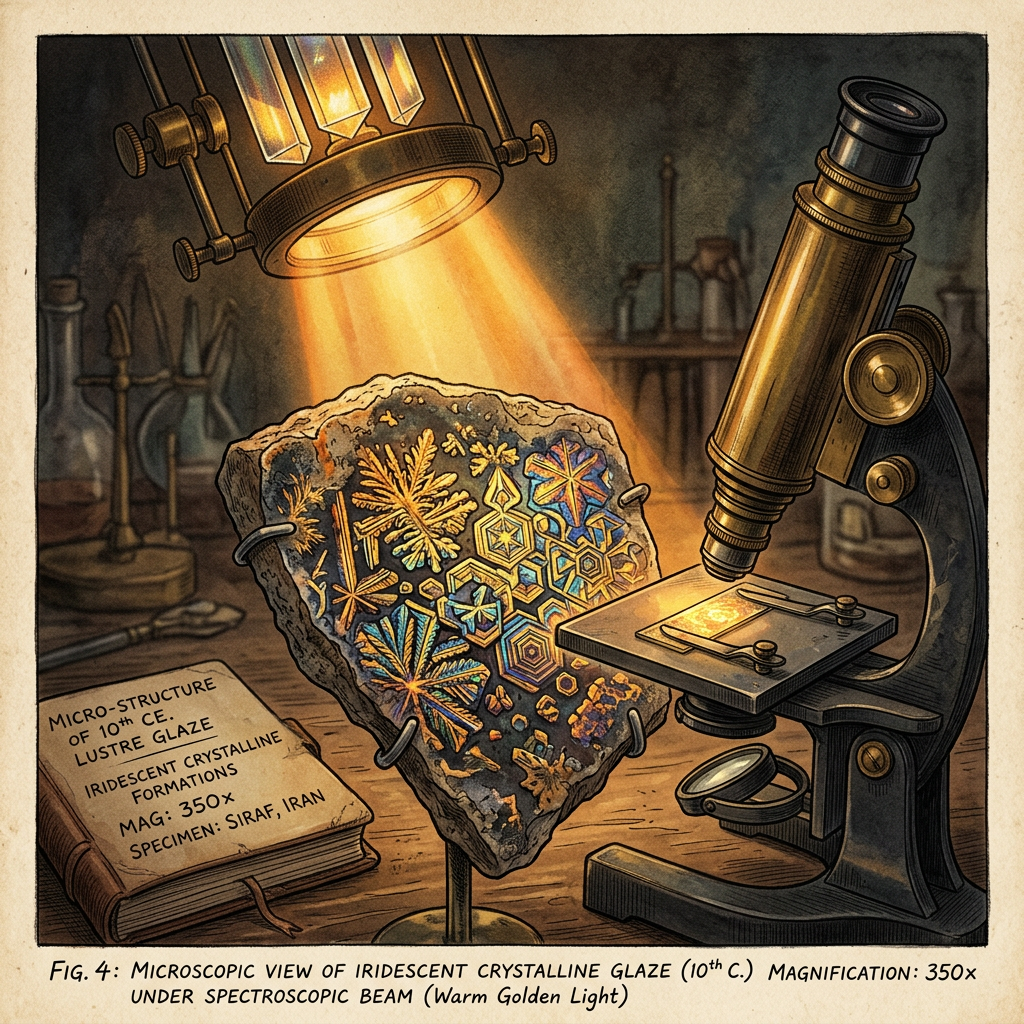
A new chemical study in Heritage Science has analyzed ceramic shards from a 3rd-century BCE laboratory site in ancient Vidisha, associated with the Vaisheshika school of natural philosophy. Using Raman spectroscopy, researchers identified a specialized crystalline glaze made from a mixture of borates and volcanic ash, which provided extreme thermal resistance.
This material was likely used to construct crucibles and retorts capable of withstanding the high temperatures required for early Indian alchemical experiments and mineral purification. The discovery provides archaeological evidence for the advanced 'molecular' understanding described in Vaisheshika texts, showing that ancient scientists were intentionally manipulating mineral structures to create high-performance industrial materials.