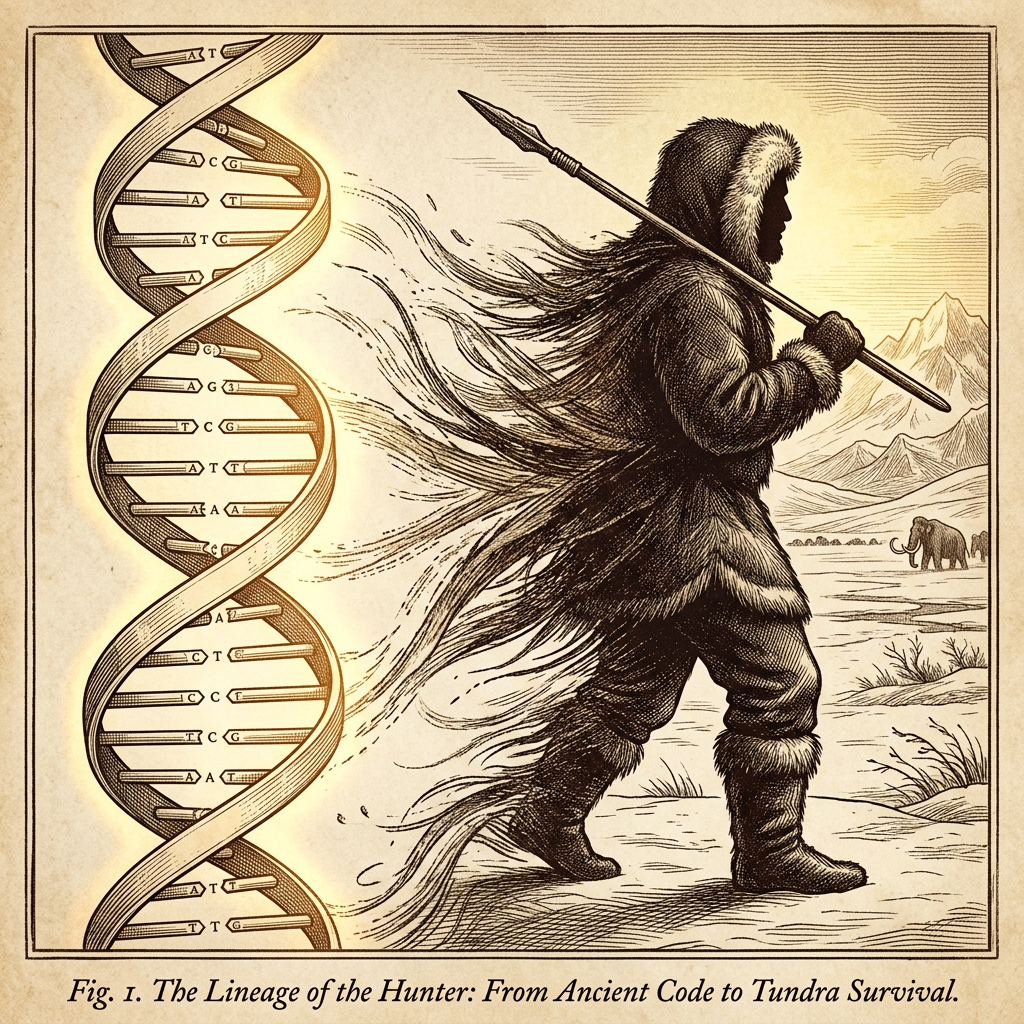
A large-scale paleogenomic study published in Science Advances has sequenced the genome of 25,000-year-old remains from the Gravettian culture. The research identified a specific metabolic mutation in the SLC22A4 gene, which likely allowed these Pleistocene hunters to thrive on a diet consisting almost exclusively of high-protein mammoth and reindeer meat without suffering from nitrogen toxicity.
This genetic adaptation highlights a rare instance of rapid human evolution in response to extreme environmental pressures during the Last Glacial Maximum. The study also revealed that this lineage remained isolated for nearly 5,000 years, providing a unique snapshot of human resilience and metabolic specialization before the warming of the Holocene reshaped the European genetic landscape.