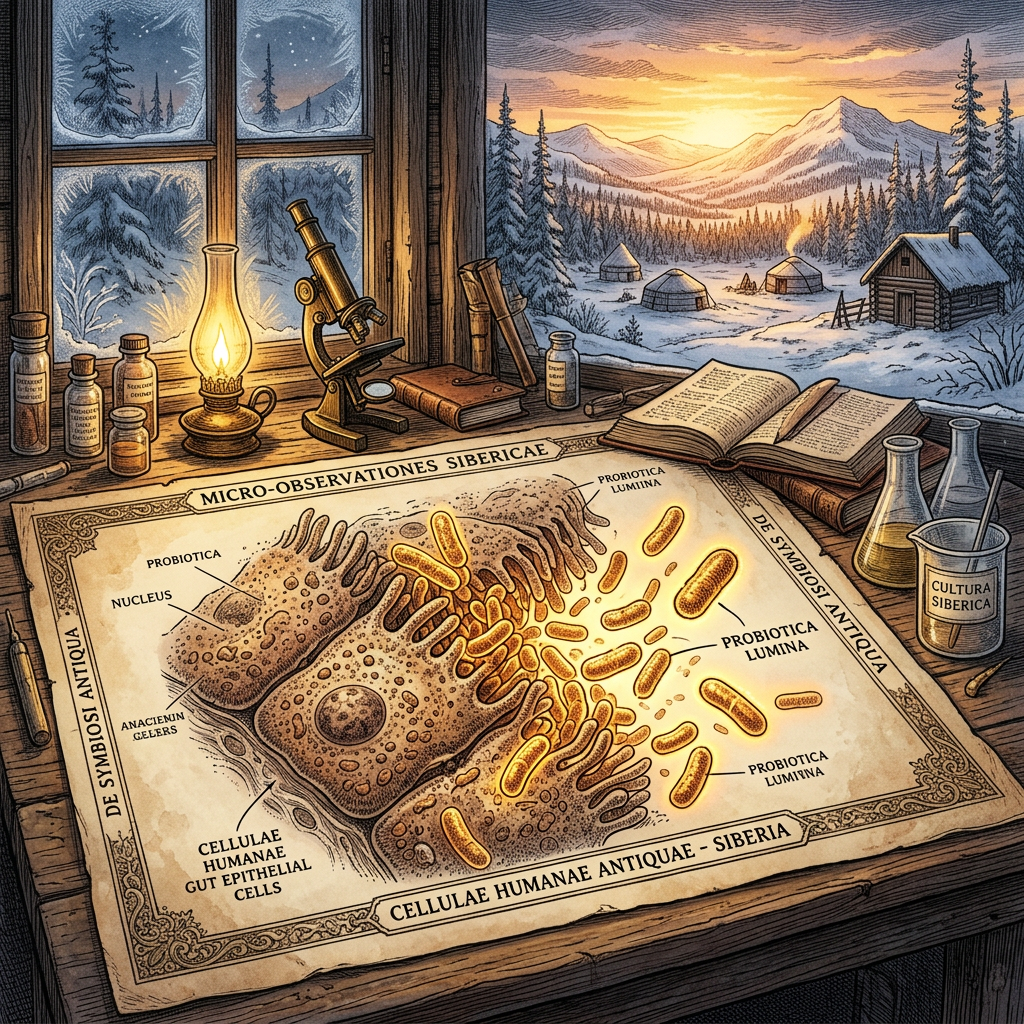
Geneticists at the Institute for Paleogenomics have identified a unique evolutionary pathway for dairy consumption in 8,000-year-old remains from the Lake Baikal region. Unlike the European lactase persistence mutation, these individuals possessed a specific set of gut-microbe-interacting genes that allowed them to digest nutrients from fermented mare's milk (koumiss).
This discovery marks the birth of a 'microbial-assisted' pastoralist culture, where human genetics evolved to co-operate with specific bacteria for nutrient extraction. The study suggests that the adoption of dairy in North Asia was not dependent on the biological ability to process raw milk, but rather on a genetic predisposition for symbiotic fermentation, rewriting the history of how humans adapted to animal-based agriculture.