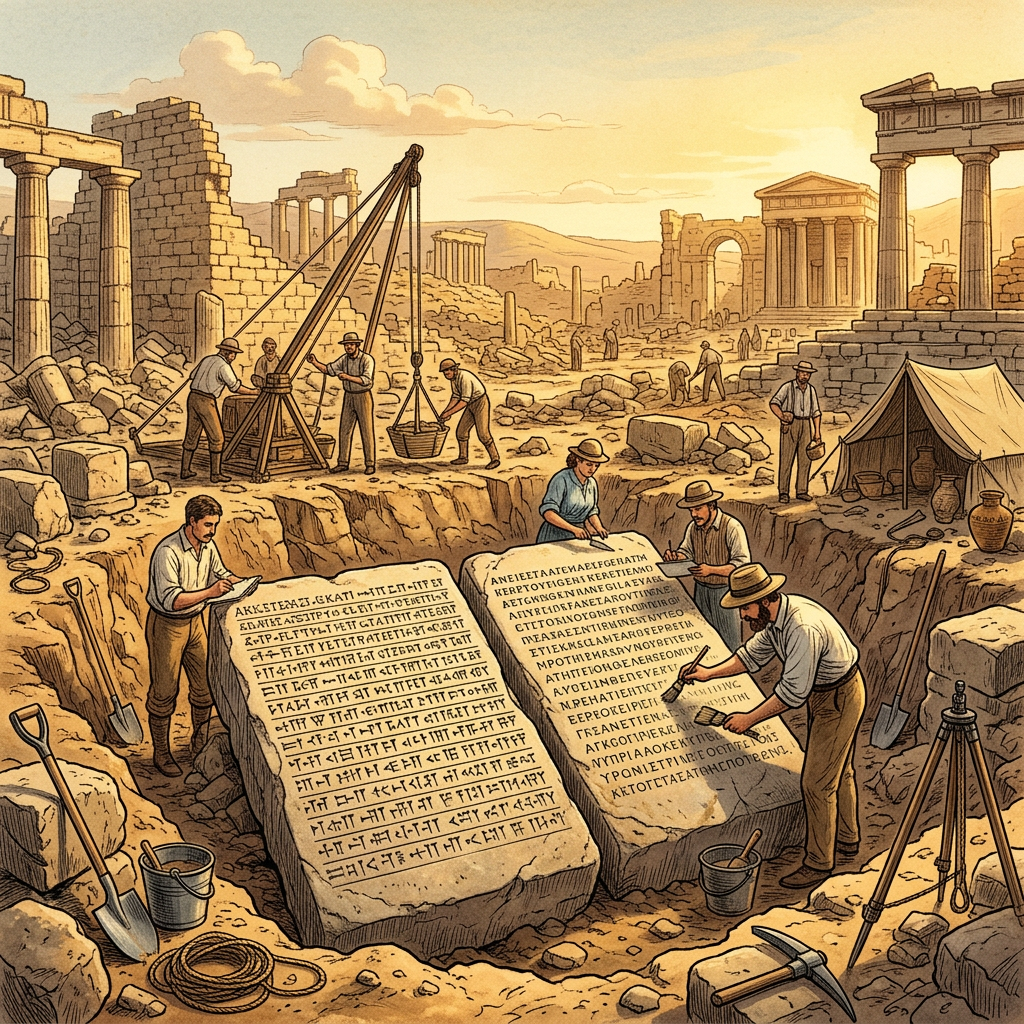
A breakthrough in the decipherment of bilingual inscriptions found at the ancient site of Balkh in modern-day Afghanistan has revealed a 4th-century BCE philosophical dialogue. The inscriptions, carved onto limestone slabs in both Aramaic and early Sanskrit, explore the metaphysics of the Atman (Universal Soul) and its relation to the Greek concept of Pneuma, suggesting a profound intellectual synthesis following the conquests of Alexander the Great.
The text records a debate between a local Vedic scholar and a Hellenistic philosopher regarding the immortality of the intellect and the nature of cosmic order. Researchers believe these inscriptions are the earliest physical evidence of a formal philosophical exchange between Indian and Greek traditions, predating the more famous Indo-Greek kingdom by nearly a century.