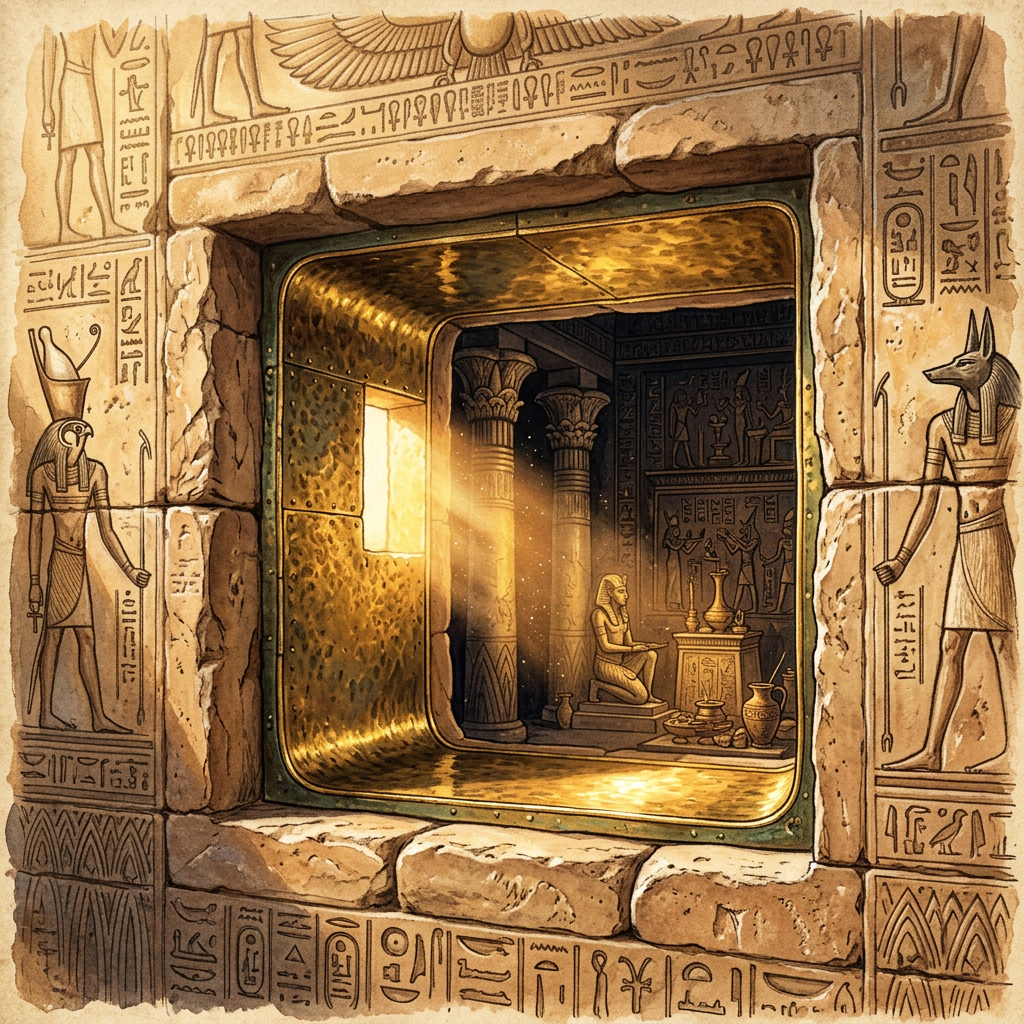
Restoration work on a long-neglected Chandela-era temple in Uttar Pradesh's Hamirpur district has led to a startling archaeological find. Engineers and conservationists uncovered a series of narrow, polished stone ducts lined with trace amounts of mercury-based compounds, designed to channel and reflect sunlight deep into the inner sanctum during specific lunar phases.
The 'Mercurial Gating' system appears to have been an advanced optical engineering feat, allowing priests to illuminate the primary deity at midnight using reflected moonlight. This discovery challenges previous assumptions about the technical limits of medieval Indian temple architecture and suggests a sophisticated understanding of light reflection and fluid dynamics among the 12th-century builders.