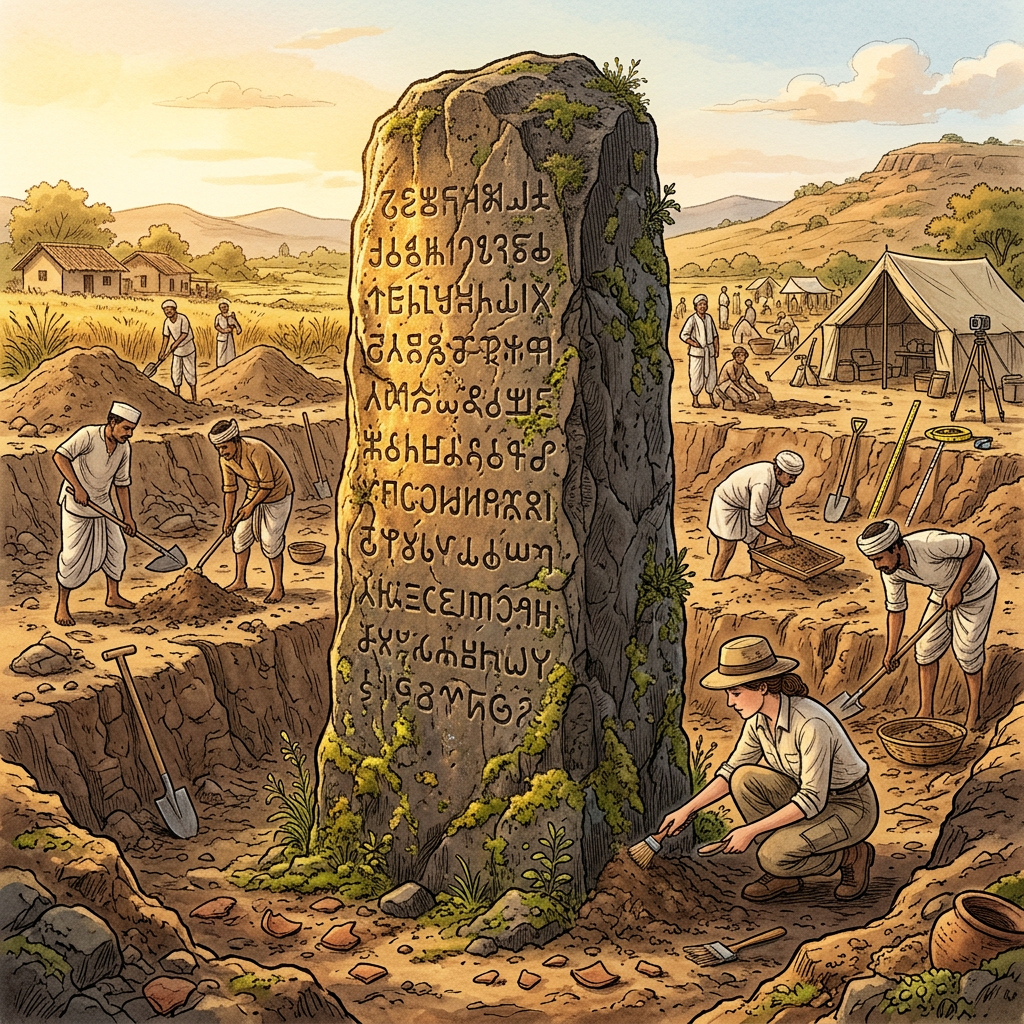
New excavations in the vicinity of the Ajanta Caves have revealed a series of basalt stelae inscribed with verses from a lost philosophical work called 'Atma-Siddhi'. Dating back to the mid-5th century CE, these inscriptions pre-date the formal systematization of Advaita Vedanta by several centuries. The text outlines a rigorous philosophical inquiry into the nature of the Sakshi (Witness-Consciousness) and its relationship to the phenomenal world.
The inscriptions are unique because they present philosophy not as a religious doctrine, but as a systematic epistemological method for uncovering the self through the removal of cognitive errors. This discovery challenges the traditional timeline of non-dualist thought, suggesting that sophisticated theories of the 'Atman' were already being debated in the Deccan long before the early medieval era.