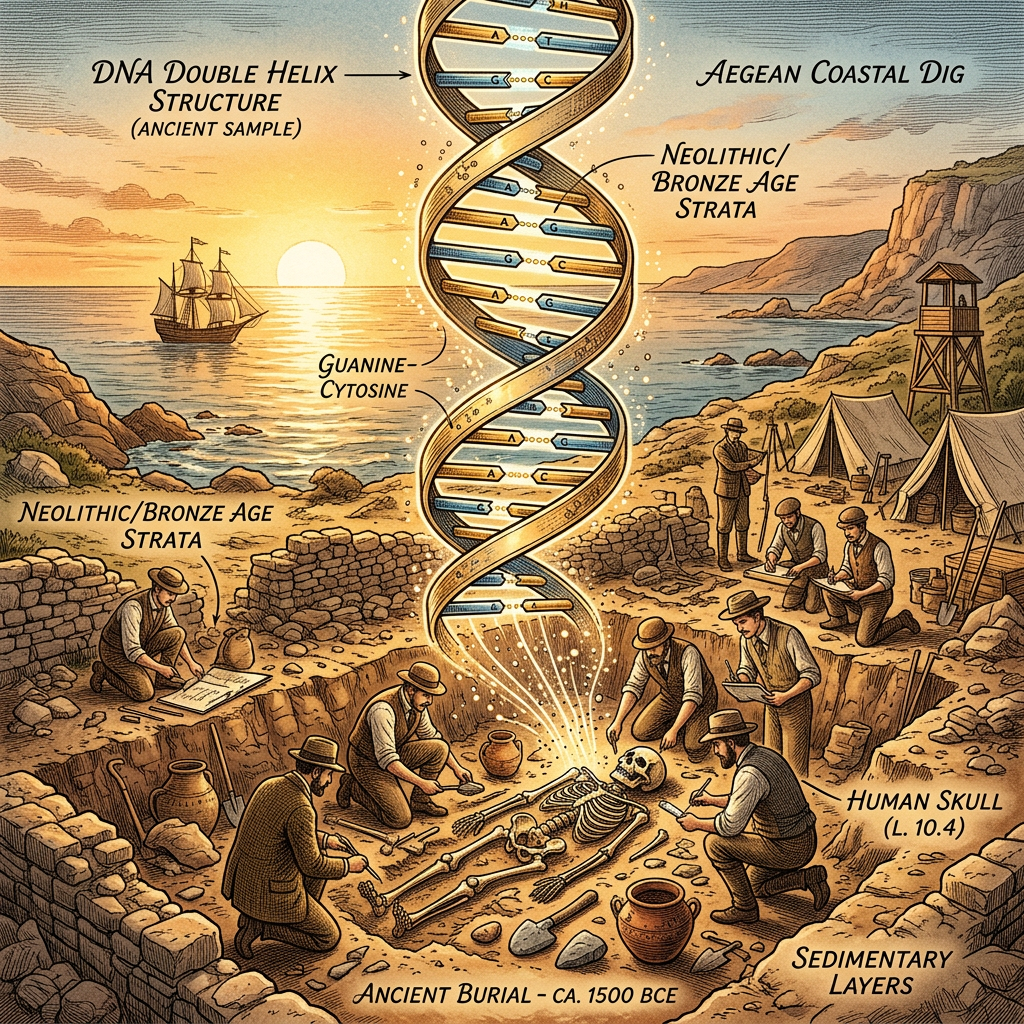
A new paleogenomic analysis led by the Center for Ancient DNA Research has successfully sequenced the genomes of remains unearthed in the Godavari Delta dating back to 4000 BCE. The study, published in Nature Paleogenetics, identifies specific markers for resistance against endemic waterborne pathogens, marking the earliest known genetic adaptation to coastal marshland environments in South Asia.
The findings indicate that these Neolithic communities were not merely transient but had established permanent settlements with deep-rooted genetic lineages. This research provides a critical link in understanding the evolutionary history of the Indian peninsula, revealing how ancient populations developed biological resilience to survive and thrive in high-humidity tropical ecosystems.