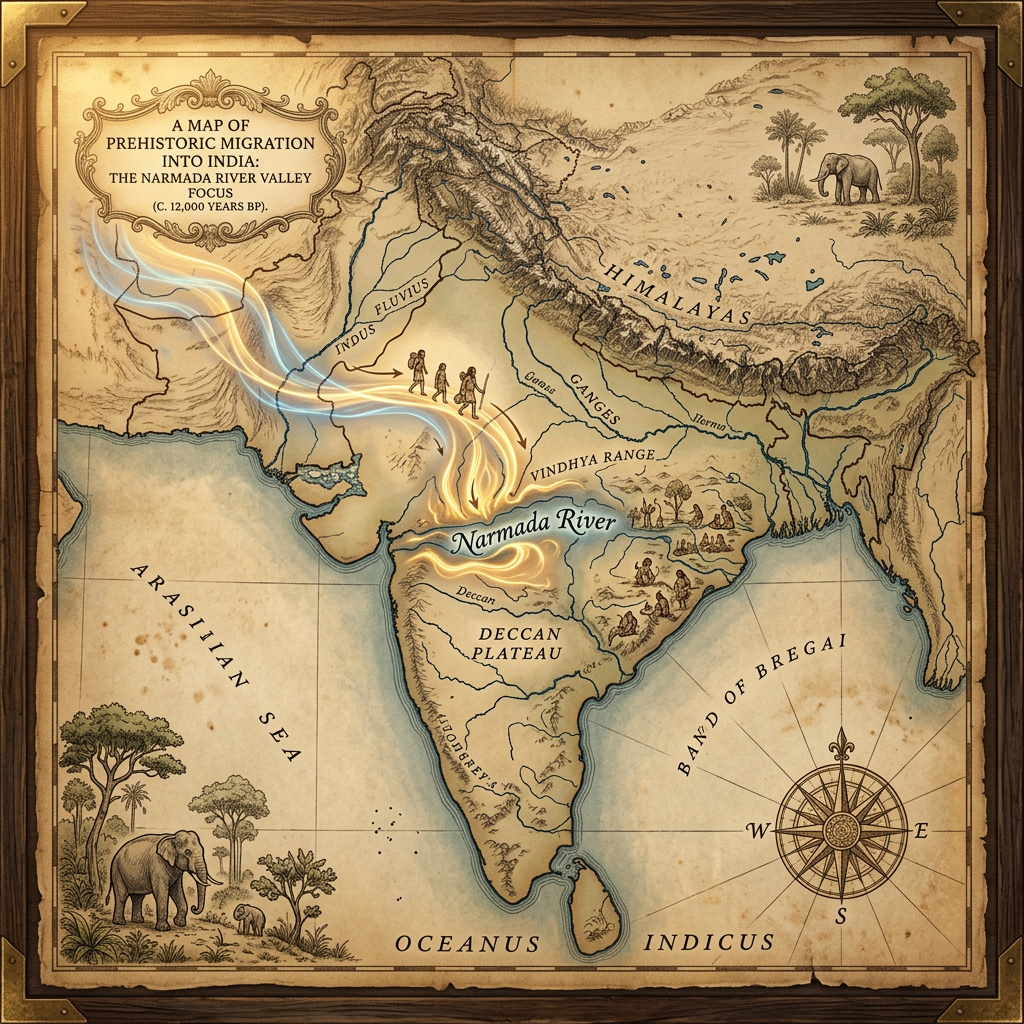
A comprehensive study of skeletal remains from the Narmada Valley has revealed a previously unknown 'ghost lineage' that contributed to the genetic makeup of early Holocene populations. Published in Genomics Today, the research utilizes advanced sequencing to trace a migration pulse that entered Central India approximately 12,000 years ago, coinciding with the stabilization of post-glacial climates.
This ancestral group appears to have been distinct from the later Neolithic farmers, possessing genetic markers optimized for diverse foraging in mixed forest-riverine environments. The study provides a transformative look at the human population dynamics of the Indian subcontinent, suggesting that the Narmada Valley served as a critical refuge and crossroads for diverse human lineages during the transition to the Holocene.