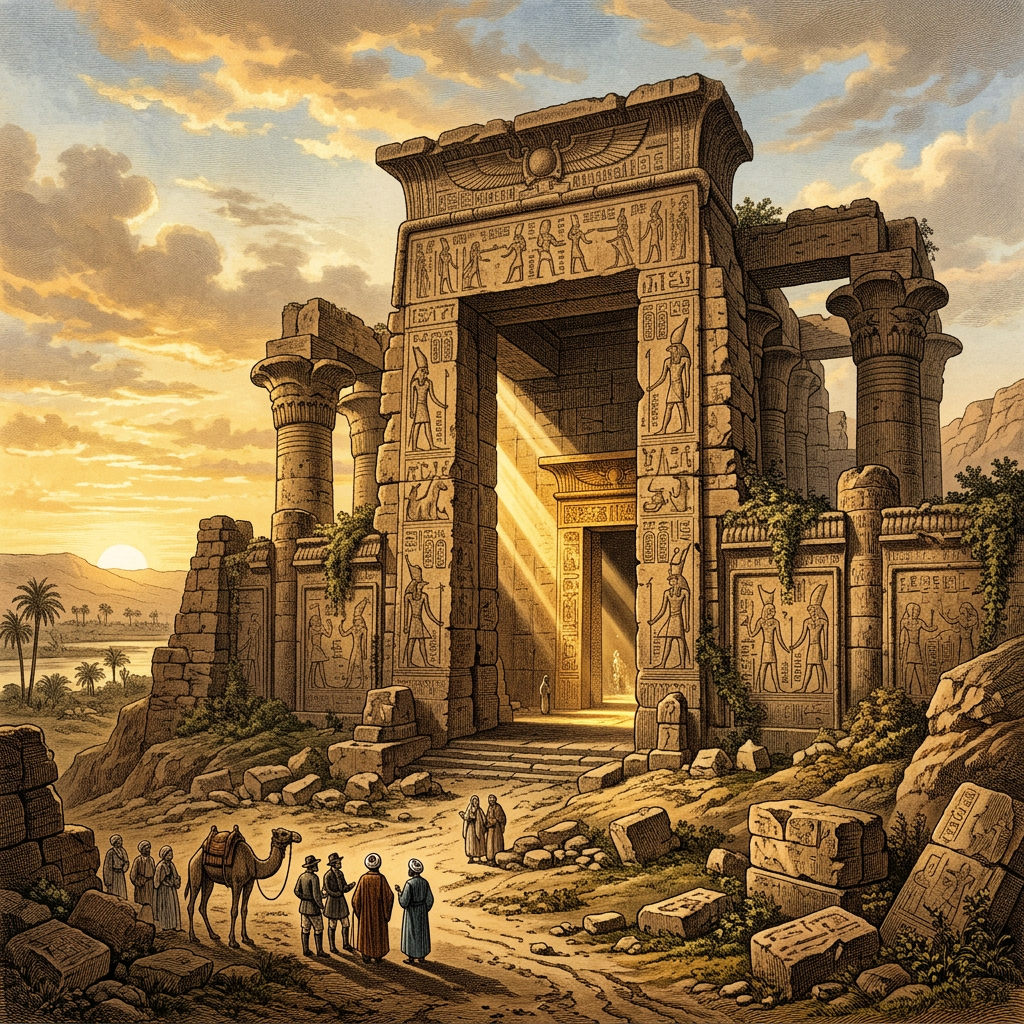
Archaeoastronomers have identified highly precise solstitial and equinoctial alignments within the architectural ruins of the 6th-century Dashavatara Temple at Deogarh, Uttar Pradesh. The study, conducted by the Indian Institute of Scientific Research in Heritage, utilized high-resolution LiDAR and 3D solar simulations to demonstrate that the temple's central sanctum was designed to capture the first rays of the summer solstice sun through a specific drainage and ventilation aperture.
This discovery confirms that Gupta-era temple architecture was deeply integrated with advanced observational astronomy. The researchers argue that the temple served not only as a religious site but also as a stone-based observatory, allowing priests to calibrate the lunar calendar against the solar cycle with minute accuracy. The geometric proportions of the temple also correlate with planetary distance ratios described in the Puranas.