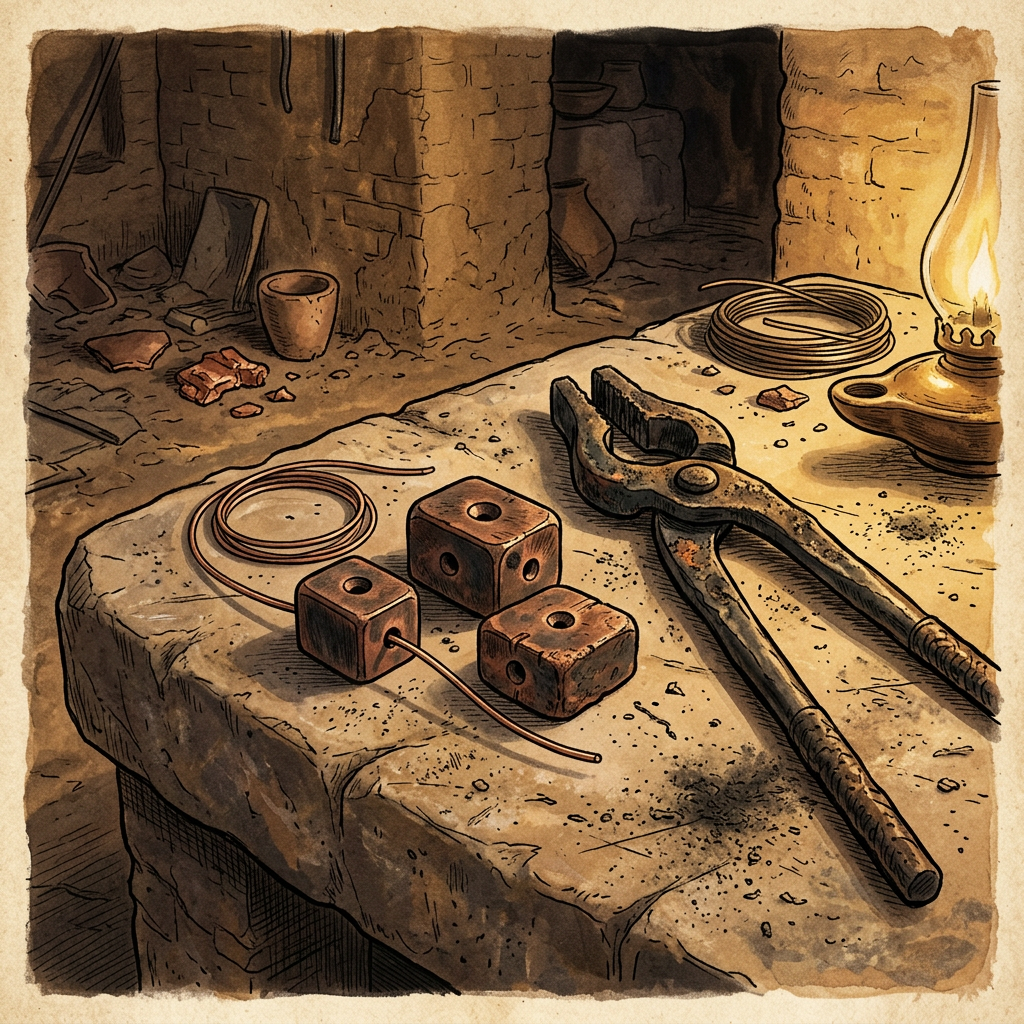
Archaeologists working at a newly identified mature Harappan site in Rajasthan's Shekhawati region have unearthed a specialized industrial unit dedicated to copper-wire production. The excavation revealed a series of stone drawing-dies and remarkably well-preserved copper tongs, suggesting a highly sophisticated level of fine-metal craftsmanship previously undocumented in the Indus Valley Civilization. The find challenges existing theories regarding the scale of decorative metalwork exports to Mesopotamian markets.
Initial analysis of the site suggests that this workshop functioned as a major hub for creating intricate jewelry and structural wire used in high-status garments. The presence of specialized refining kilns and standardized drawing-blocks indicates a transition from general smithing to a proto-industrial factory model. Researchers believe this facility operated for over two centuries, serving as a primary supplier for the urban elite of nearby regional centers.