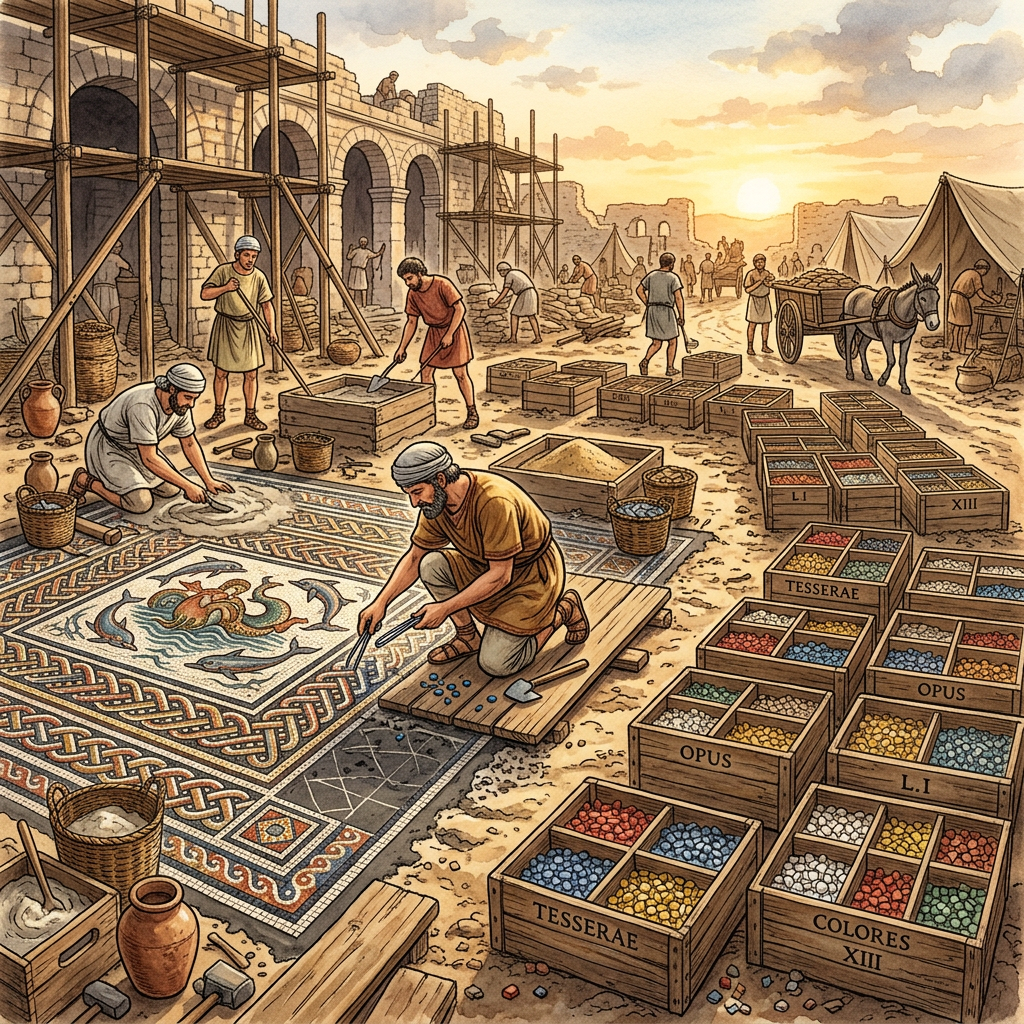
Excavations near the town of Piazza Armerina in Sicily have uncovered a large-scale Roman mosaic workshop from the 2nd century CE. Unlike typical villa finds, this site served as a production hub, featuring storage pits filled with thousands of sorted, unfinished tesserae (mosaic tiles) made from rare marbles and semi-precious stones. The discovery of specialized tools and layout templates provides a rare look at the industrial processes behind the Roman Empire's most famous decorative arts.
Archaeologists found half-finished geometric panels and clay 'practice boards' where apprentice mosaicists likely honed their skills. The site is believed to have been an imperial facility that supplied master craftsmen and materials to elite villas across the Mediterranean. Chemical analysis of the stones has already traced marble sources back to modern-day Turkey, Greece, and North Africa, highlighting the workshop's global reach.