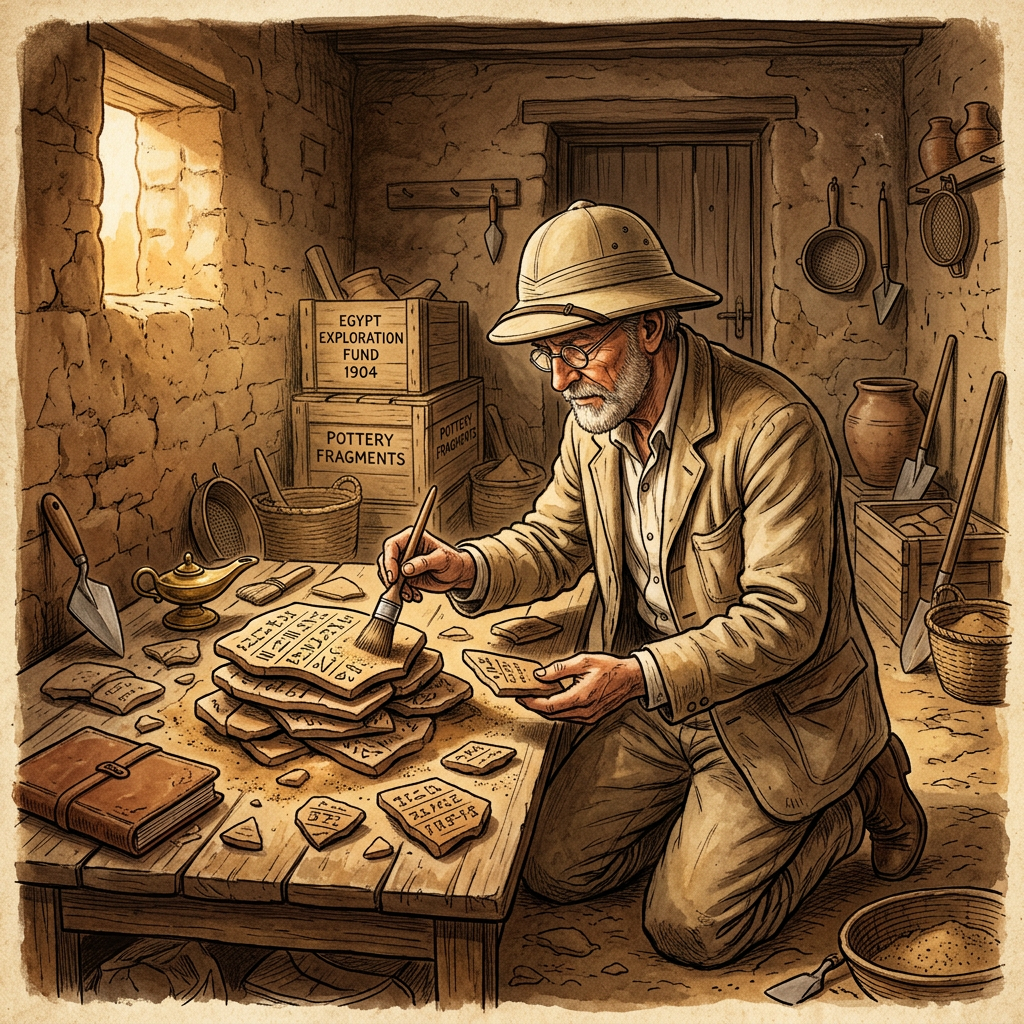
A remarkable archive belonging to a professional guild of funeral mourners from the 22nd Dynasty has been unearthed in the necropolis of Herakleopolis Magna. The find consists of hundreds of inscribed ostraca (pottery shards) that serve as a ledger for funeral services, detailing the fees paid in grain and oil for specific lamentation rituals. This provides a rare look into the commercialization of death and the social hierarchy of funerary workers in Late Period Egypt.
The archive mentions different 'grades' of mourning, ranging from basic weeping to elaborate theatrical performances that included hair-tearing and rhythmic chanting. Some ostraca even record performance reviews and disputes over unpaid wages for 'highly skilled' lamenters. This discovery highlights the intricate social and economic structures that supported the ancient Egyptian cult of the dead beyond the royal and elite circles.