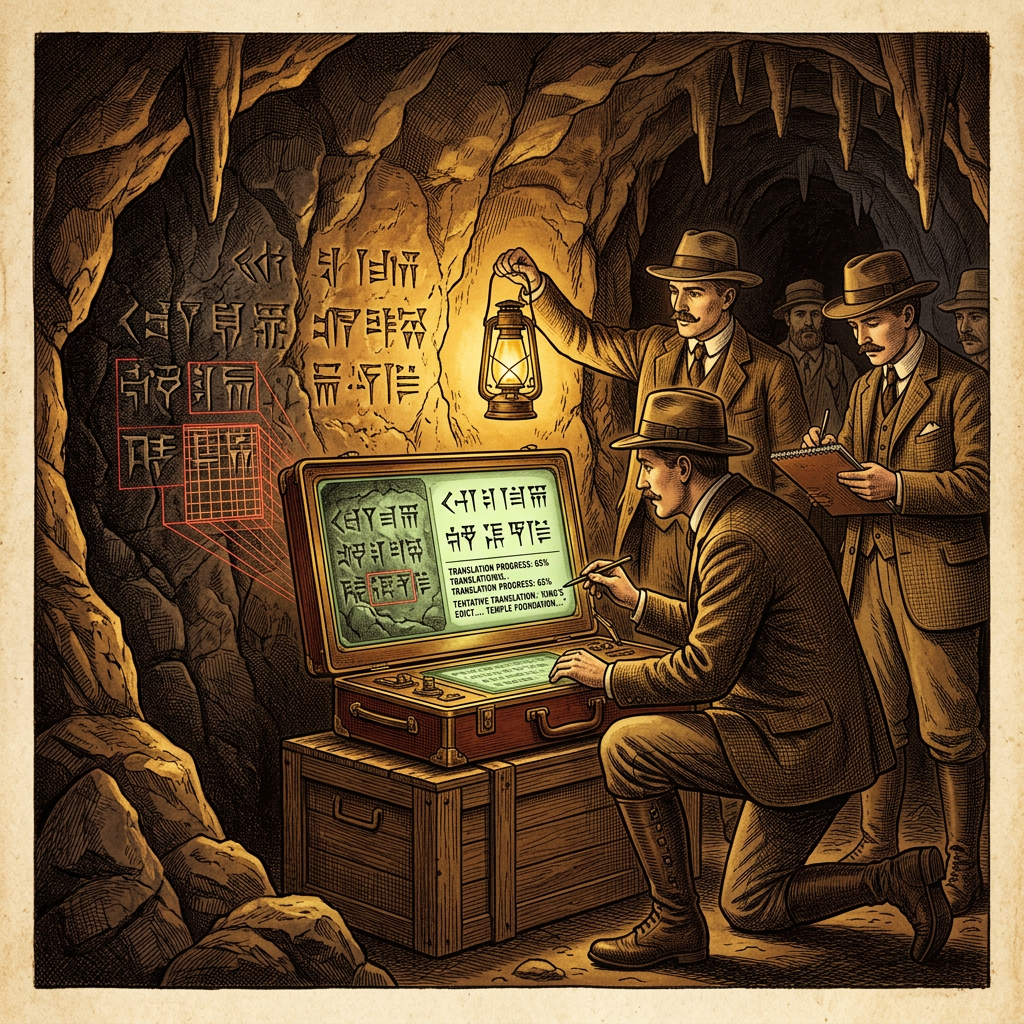
An international team of epigraphists and AI researchers has announced the successful decipherment of a rare set of inscriptions found in a remote cave in the Karakoram range. The inscriptions, dating to the 4th century CE, utilize a unique hybrid script that blends Kharosthi and Brahmi characters. Using a new neural network trained on over 50,000 ancient South Asian characters, the team was able to translate what appears to be a Sanskrit manual for high-altitude survival and alpine medicinal botany, likely used by Buddhist monks traversing the trans-Himalayan routes.
The text details the use of specific endemic herbs to treat "mountain sickness" and provides a theological justification for the conservation of high-altitude ecosystems. This discovery is significant because it provides the first written record of ancient Himalayan pharmacological knowledge in a script that was previously thought to be extinct or purely administrative. The decipherment reveals that these hybrid scripts were deliberately developed as a linguistic bridge between the Gandhara and Magadha intellectual traditions.