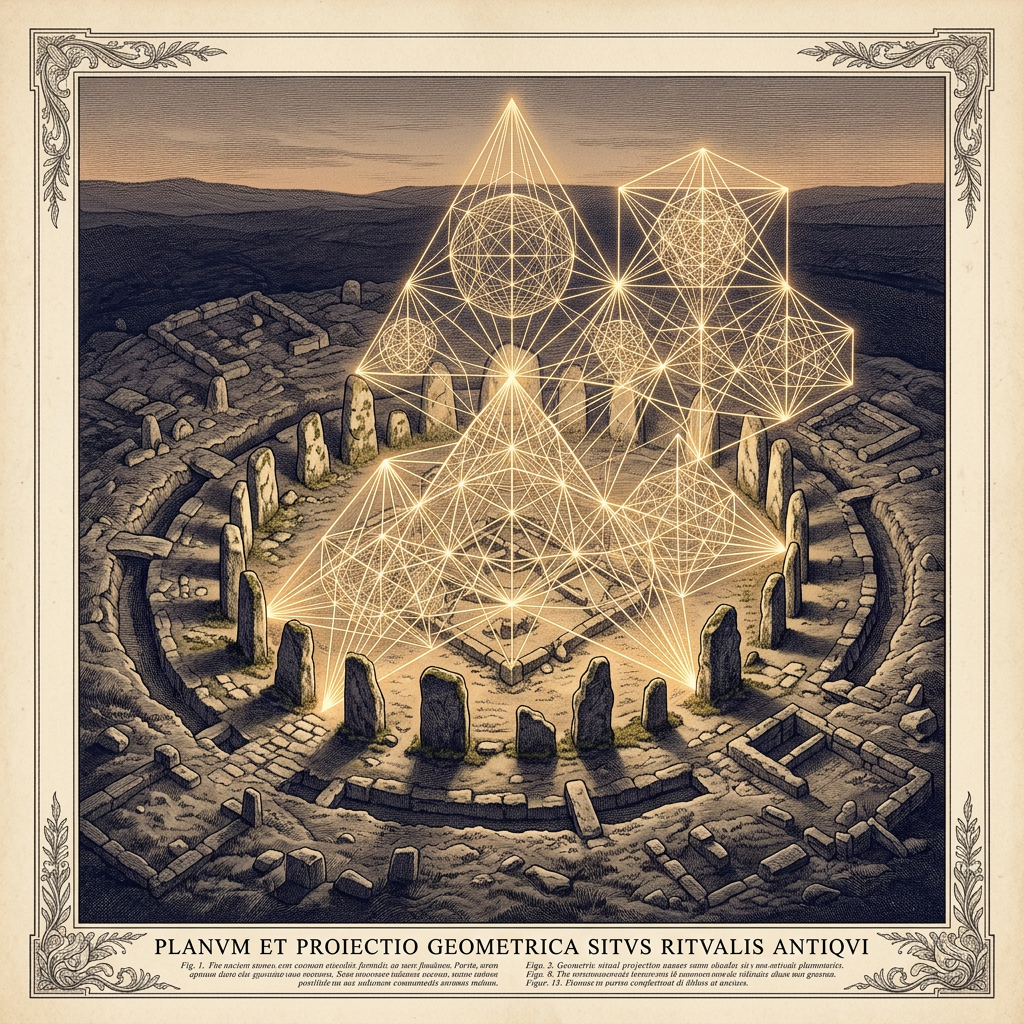
Researchers at the Institute for Ancient Mathematical Sciences have published a study in the Journal of Archaeological Geometry detailing the discovery of recursive geometrical scaling in the foundations of 2nd-millennium BCE ritual enclosures in Haryana. These structures, often referred to in Vedic literature as 'Chariot Altars,' were found to adhere to a precise mathematical ratio that involves the approximation of irrational numbers through iterative brick-laying patterns. The study suggests that these designs were physical manifestations of the geometric theorems found in the Sulba Sutras.
This finding is significant because it provides physical evidence of advanced theoretical geometry used in large-scale construction long before the classical period of Indian architecture. The scaling laws identified in these ritual sites allow for the expansion or contraction of the altar's area while maintaining precise square and circular proportions. This indicates a highly sophisticated understanding of proportionality and spatial scaling that was standardized across different settlements of the post-Harappan Vedic era.