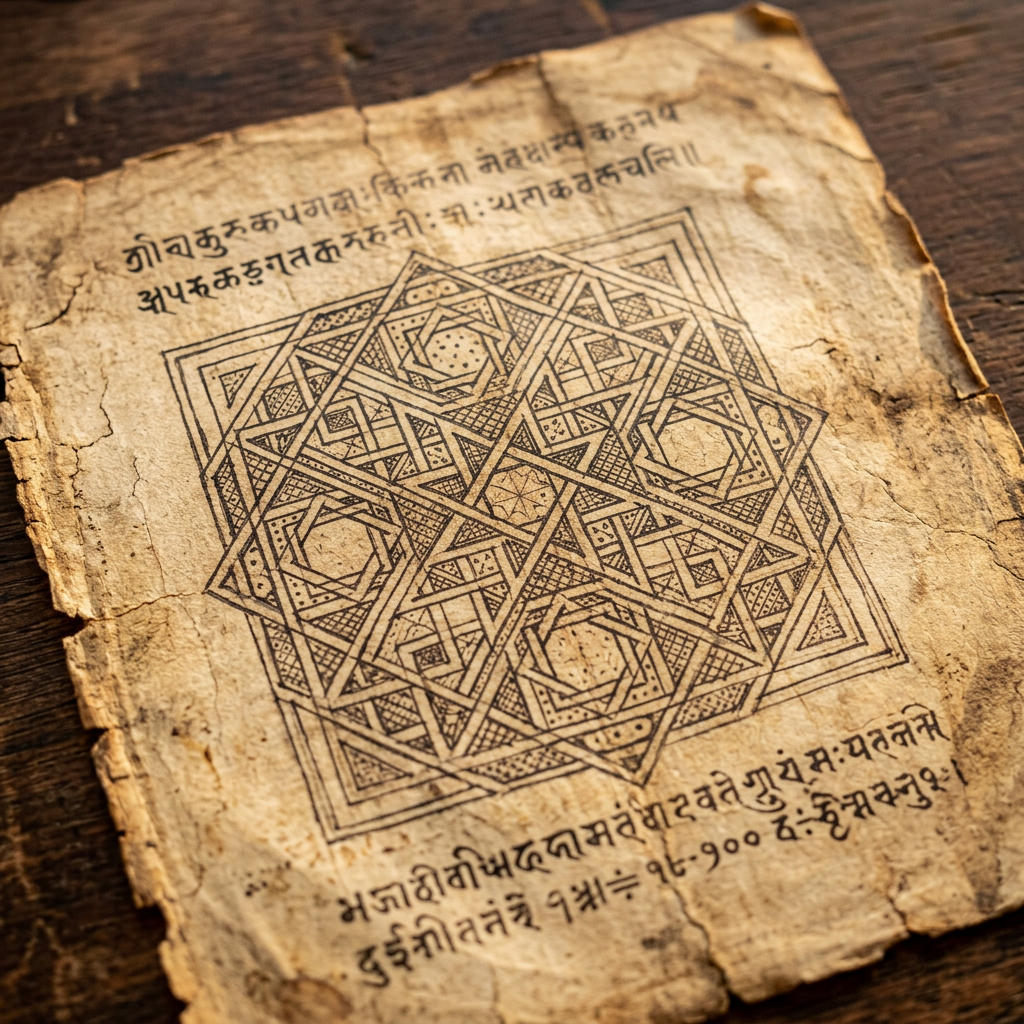
A breakthrough in computational paleography has led to the successful decipherment of fragmented Sharada script manuscripts recovered from high-altitude archives. These 8th-century texts contain previously unknown mathematical theorems focusing on combinatorial geometry, specifically techniques for calculating the properties of complex, interlocking polygons used in ritual architecture.
The research, published in the Journal of Indian Philosophy and Science, demonstrates that ancient Indian mathematicians had developed recursive methods for spatial tessellation centuries earlier than previously assumed. These AI-reconstructed texts provide new insights into the intellectual sophistication of the Sharada-using scholarly communities of the medieval period.