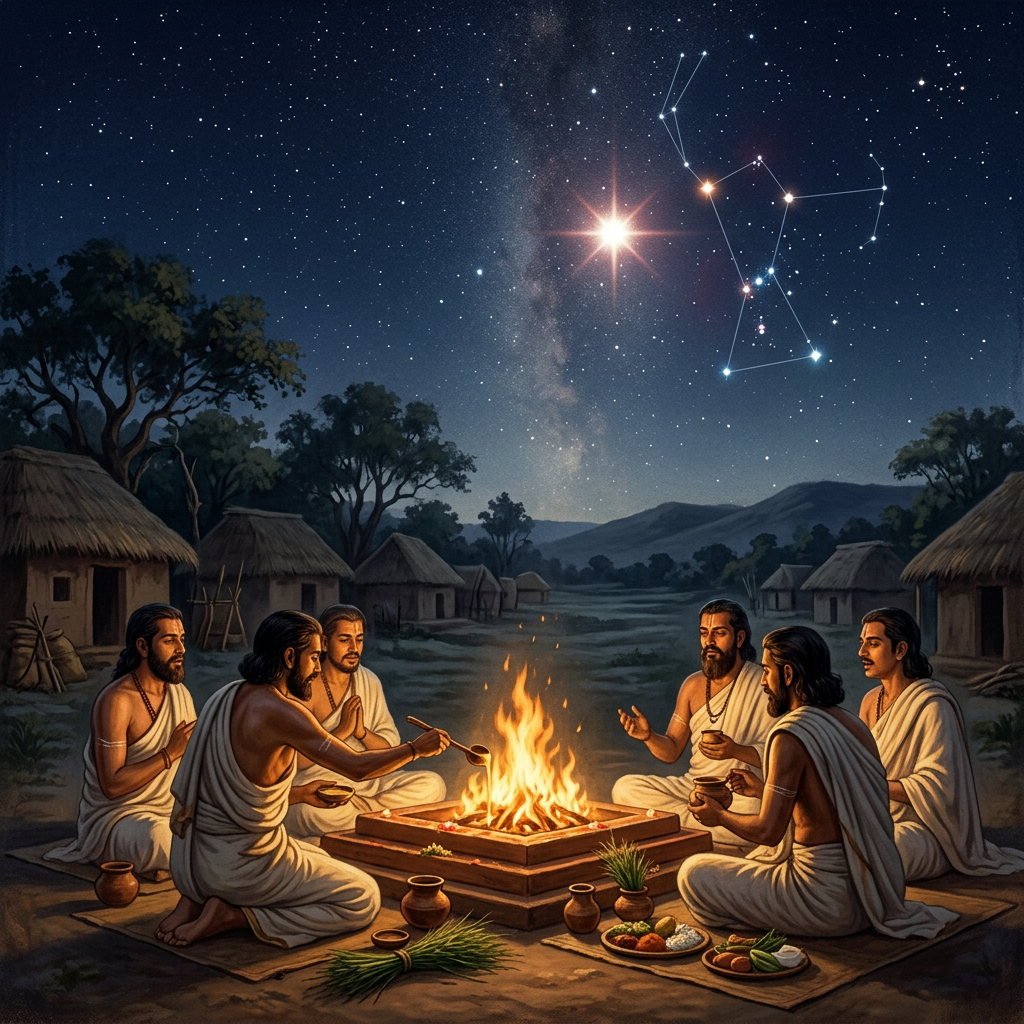
A multi-disciplinary study published in the Astronomy & Astrophysics Review has successfully correlated specific celestial descriptions in the later layers of the Rigveda with a rare supernova event that occurred in the 2nd millennium BCE. By using high-resolution celestial back-mapping, researchers identified a transient star event within the Orion constellation that would have been visible during the day for several weeks.
The research suggests that several enigmatic hymns previously interpreted as purely mythological actually contain precise observational data regarding the sudden appearance and gradual fading of this 'new star.' This correlation provides a new chronological anchor for the composition of late Vedic verses and highlights the importance of oral traditions as reliable repositories for ancient astronomical data.