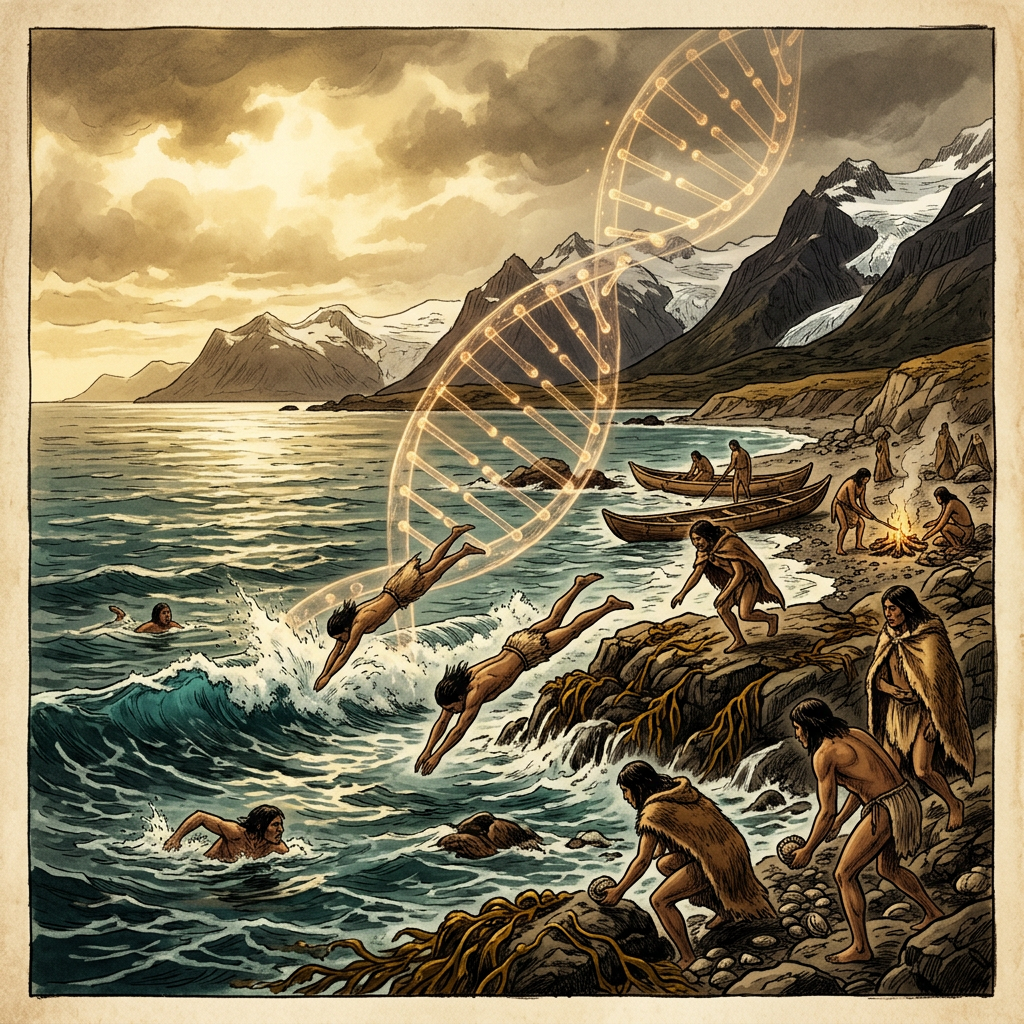
A new paleogenomic study of 6,000-year-old remains from the southernmost tip of South America has identified the earliest known genetic markers for metabolic adaptation to cold-water immersion. The research, appearing in Science Advances, shows that the ancestors of the Kawésqar and Yaghan people possessed unique variants of genes regulating brown adipose tissue and peripheral vasoconstriction.
These genetic traits allowed early maritime foragers to survive and thrive in the frigid sub-Antarctic waters of the Patagonian fjords while diving for shellfish. The study provides the first molecular evidence of how Pleistocene-era migrations into extreme southern environments led to rapid, localized evolutionary changes in human physiology.