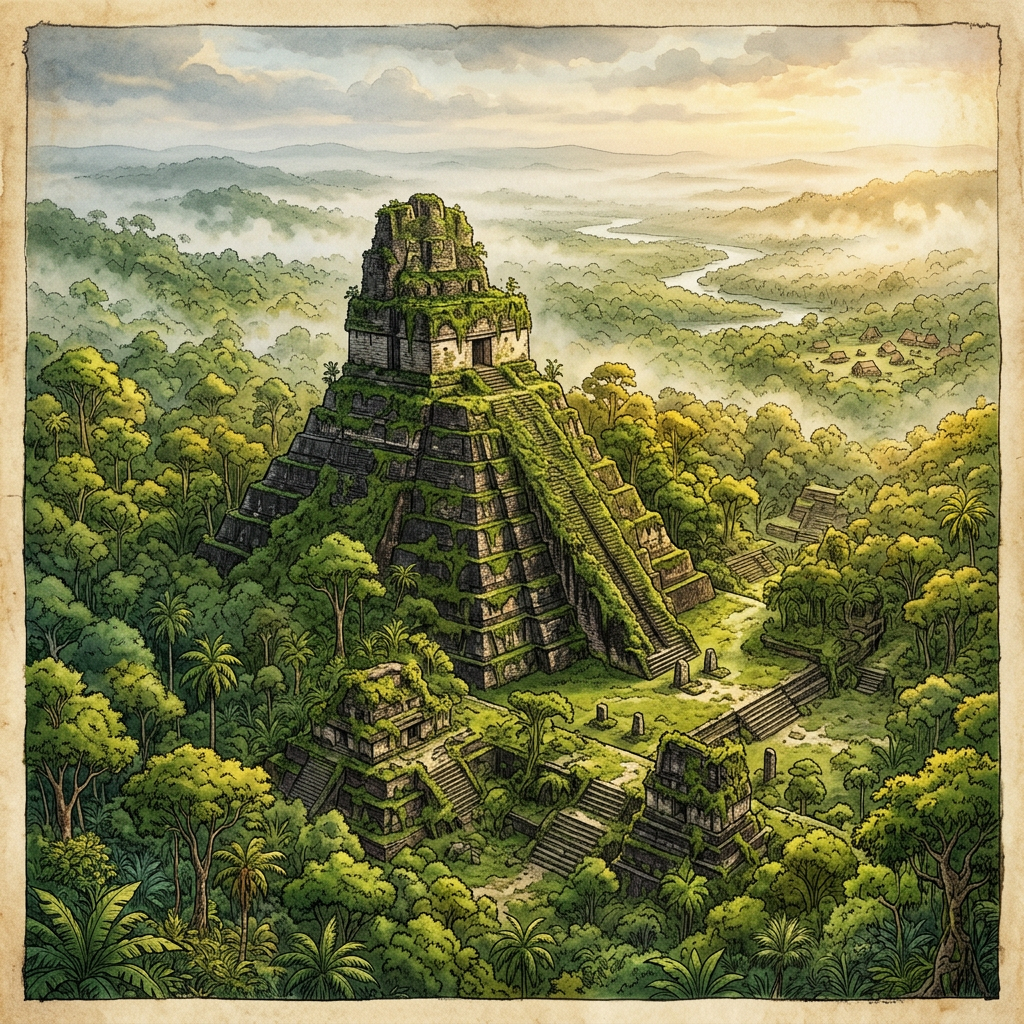
A team of international researchers has utilized advanced satellite interferometry to identify a sprawling, previously unknown Maya ceremonial complex deep within the dense rainforests of Chiapas, Mexico. The discovery includes a central pyramid standing over 30 meters tall, surrounded by a network of smaller structures, plazas, and a sophisticated water-management system that dates back to the Pre-Classic period (c. 600 BCE – 250 CE).
Initial ground surveys have confirmed that the site, provisionally named K’aan-Mul, remained hidden for centuries due to the extreme canopy density. Preliminary findings suggest the city played a pivotal role as a regional trade hub, connecting highland resources with lowland agricultural centers. The presence of monumental architecture at such an early date challenges existing timelines for the development of urban complexity in the southern Maya region.