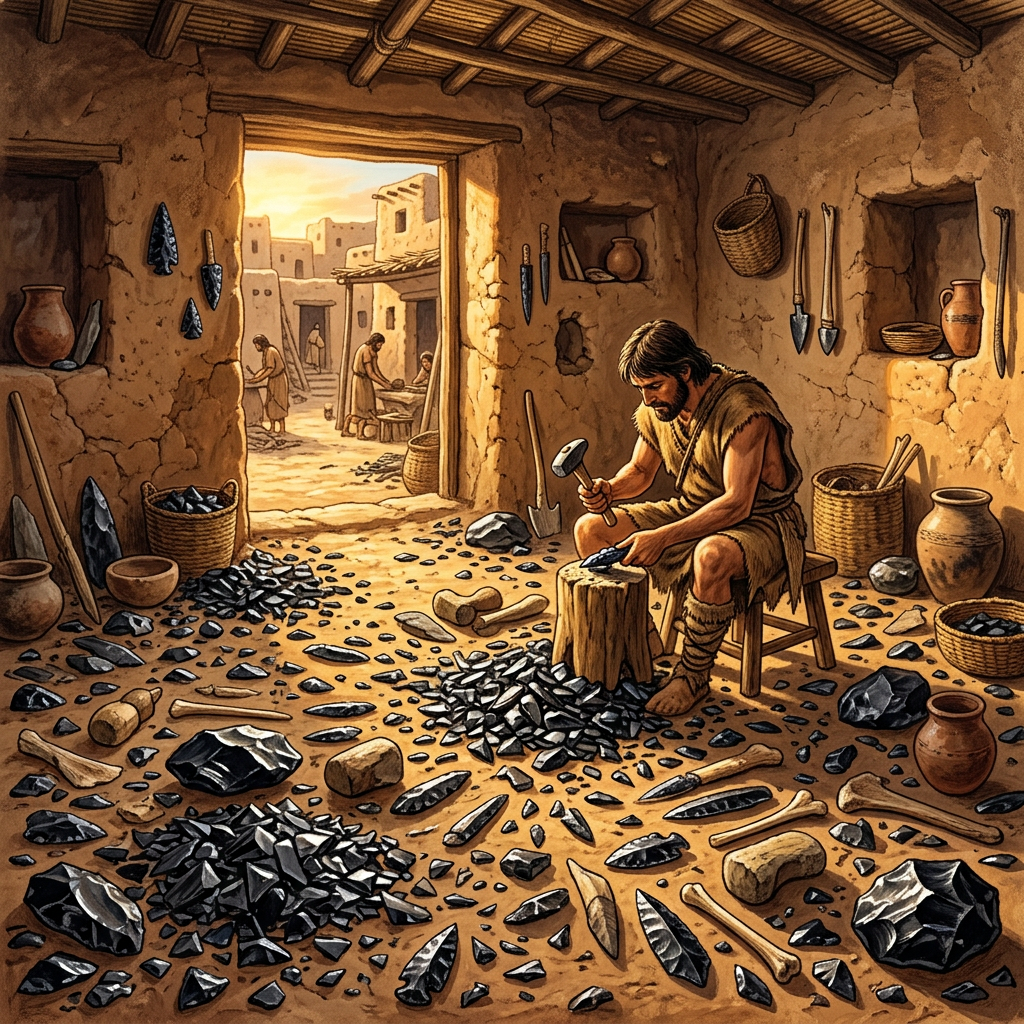
A new excavation season at the UNESCO World Heritage site of Çatalhöyük in Turkey has led to the discovery of a dedicated "Artisan Quarter" dating to 7500 BCE. Unlike the domestic spaces typically found at the site, this area consists of specialized workshops filled with thousands of obsidian flakes and pre-formed cores. The concentration of high-quality tools suggests the existence of a proto-guild of skilled craftsmen who traded their wares across the Levant.
The discovery includes the remains of specialized hearths used to heat-treat the volcanic glass, a technique that improved its fracturing properties. Lead archaeologists note that this spatial separation of industry from living quarters represents a significant shift in Neolithic social organization. The sheer volume of material indicates that Çatalhöyük was not just a settlement, but a major industrial center for the ancient world's most valuable sharp-edged material.