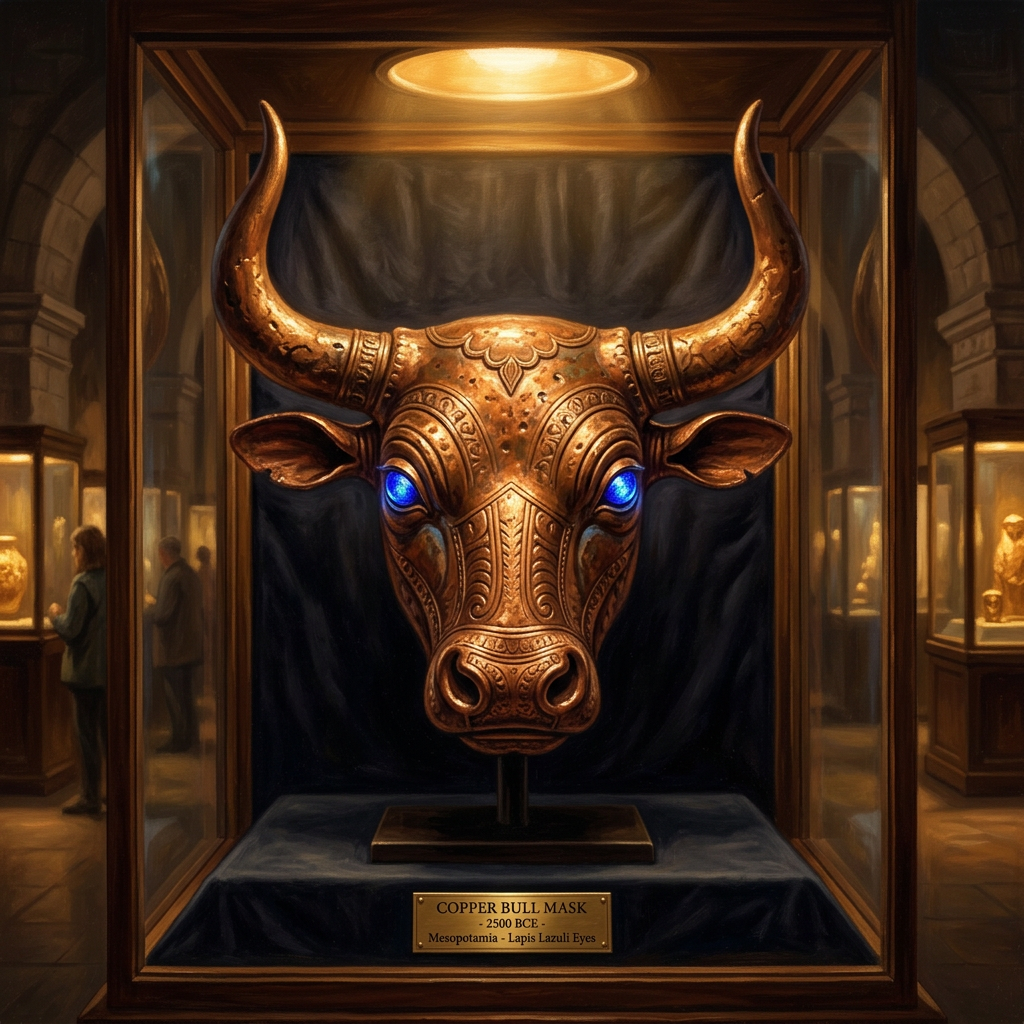
At the site of ancient Lagash in modern-day Iraq, a stunning copper bull mask featuring eyes of deep blue lapis lazuli has been recovered from a temple dedicated to Ningirsu. The mask's interior wear patterns suggest it was worn by a high priest during an annual 'Plough-Blessing' festival, where the first furrow of the season was ritually cut by the king himself. This event marked the beginning of the agricultural year and was a cornerstone of Sumerian social cohesion.
The use of lapis lazuli imported from distant Afghanistan underscores the immense wealth and importance invested in these seasonal rituals. Archaeologists also found small clay models of oxen nearby, which likely served as surrogate offerings for those unable to provide live animals. This discovery offers a rare glimpse into the physical performance of state-level agricultural religion in early Mesopotamia.