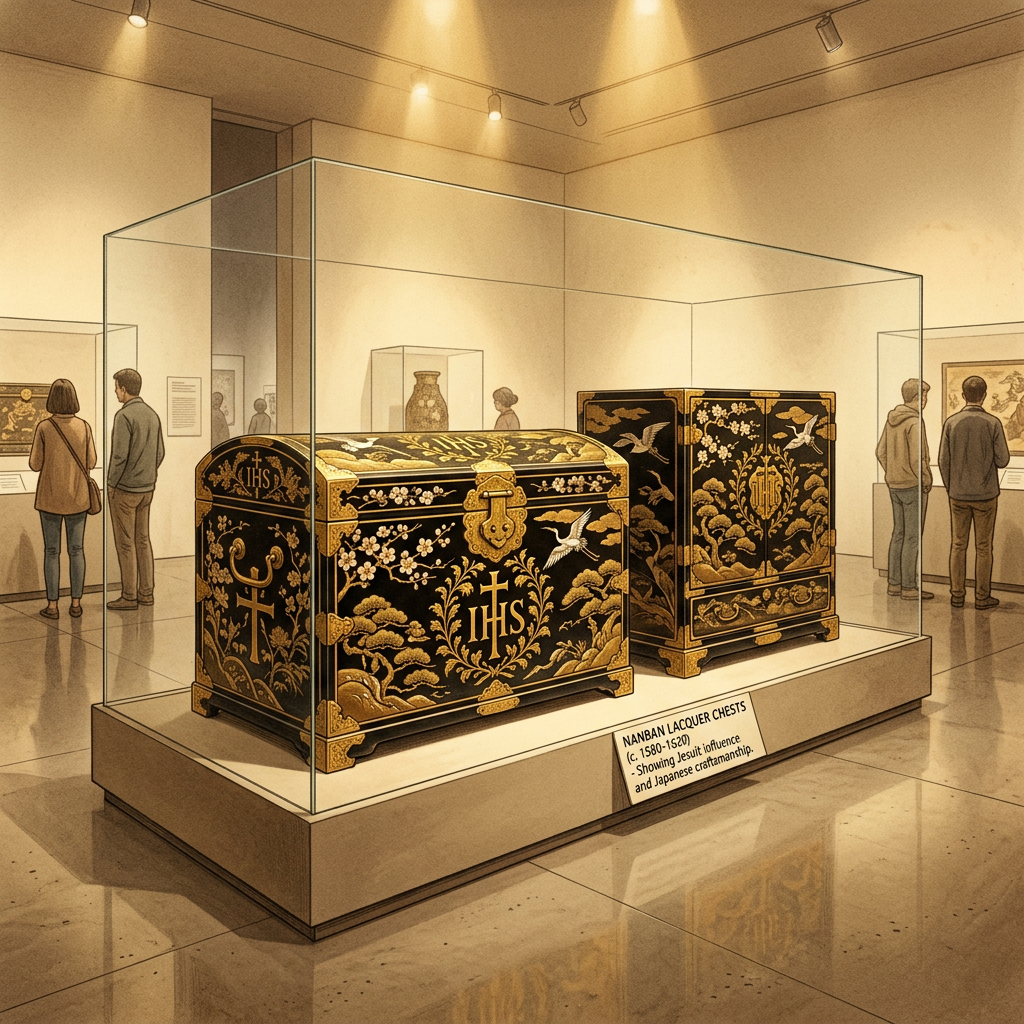
The Portuguese government has formally returned a collection of 17th-century Namban-style Jesuit reliquaries to the city of Nagasaki, Japan. These rare artifacts, which combine European silver-work with Japanese urushi lacquer techniques, were taken during the ban on Christianity in Japan when European missionaries were expelled. They have been housed in Lisbon's National Museum of Ancient Art for nearly 300 years.
The return ceremony, held at the Nagasaki Museum of History and Culture, marks a significant moment in the reconciliation of shared religious history. The reliquaries are considered 'living heritage' by the local Catholic community and provide essential physical evidence of the early cultural synthesis between the Iberian Peninsula and the Tokugawa Shogunate.